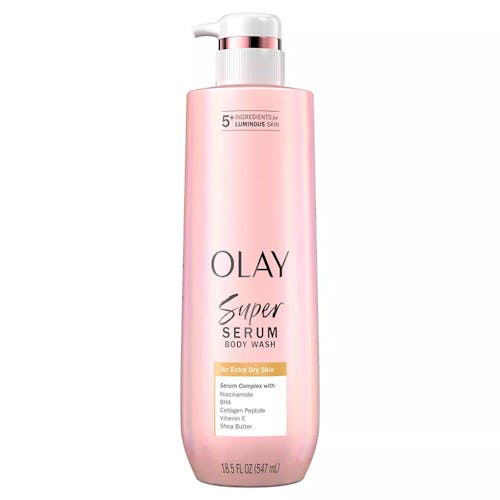
Redirecting you to our exclusive offer…

If you are not redirected automatically, click here.

Thanks for visiting! Your offer will open shortly.

  • This is Slide 1 Title

    This is slide 1 description. Go to Edit HTML and replace these sentences with your own words. This is a Blogger template by Lasantha - PremiumBloggerTemplates.com...

  • This is Slide 2 Title

    This is slide 2 description. Go to Edit HTML and replace these sentences with your own words. This is a Blogger template by Lasantha - PremiumBloggerTemplates.com...

  • This is Slide 3 Title

    This is slide 3 description. Go to Edit HTML and replace these sentences with your own words. This is a Blogger template by Lasantha - PremiumBloggerTemplates.com...

Friday, May 30, 2025

The Trap Of Postpartum Benzos

Catherine McQueen/Moment/Getty Images

In February 2021, Grace Bagwell Adams, Ph.D., gave birth to her second child. It was the peak of the pre-vaccine COVID surge, and like so many who delivered babies during that intense chapter of the pandemic, Adams had carried fear and anxiety with her through her pregnancy. One week postpartum, she still didn’t feel right, so she returned to her OB/GYN. She told her doctor she was having “crippling” anxiety and she scored off the charts on the Edinburgh scale, the gold-standard screening tool for postpartum depression and anxiety.

“He said something along the lines of, ‘Well, it’s only been a week.’ And then he gave me a prescription for Klonopin,” she says.

Klonopin, the brand name for clonazepam, is a benzodiazepine—a class of fast-acting, short-term medications often prescribed for acute anxiety, panic, insomnia, and more. If you’ve heard of lorazepam (thank you, White Lotus), you’ve heard of a “benzo,” as the medications are called colloquially.

Adams had also been prescribed the opioid hydrocodone for pain. As a public health researcher, she knew the two medications could have dangerous, even deadly, interactions. Yet, overwhelmed and exhausted, she struggled to advocate for herself in the moment. When she got home, her husband called her doctor’s office and requested a prescription for Lexapro instead—a selective serotonin reuptake inhibitor (SSRI), widely considered part of a first-line treatment plan for postpartum anxiety. Adams never took the Klonopin; she started Lexapro the next day.

Her experience, though, led her to conduct a study on benzodiazepine prescribing patterns in the postpartum period. Published last June, Adams’ work found prescriptions for benzos rose by 17% during the pandemic. SSRI prescriptions, meanwhile, stayed flat.

Experts suggest that changes throughout the pandemic, including relaxed regulations on prescribing benzos and a lack of education around maternal mental health amongst providers, remain in place today, meaning prescription rates for the powerful drugs could still be elevated.

Make no mistake, benzodiazepines can play an important role in treating postpartum depression and anxiety, says reproductive psychiatrist and Mavida Health co-founder Sarah Oreck, M.D, particularly as a “bridge” to ease acute symptoms while waiting for longer-term treatments like SSRIs or therapy to take effect.

The problem? The pandemic pulled back the curtain on how often these medications aren’t being used or prescribed appropriately.

The rise of Rxs for benzos

The rise in benzo prescriptions during the pandemic comes as no surprise to Dr. Oreck: It’s well-documented that rates of postpartum depression, and especially postpartum anxiety, spiked during that time.

There are a few other things going on, too: First, in the context of pregnancy or postpartum care, she says that OB/GYNs are often the ones writing those prescriptions, as was the case with Adams. OB/GYNs sometimes serve as the first (and sometimes only) line of defense.

“I think this increase shows that OBs feel like they don’t have many tools in their toolbox,” says Dr. Oreck. “Benzodiazepines become a kind of reflexive option.”

Many physicians, OB/GYNs included, receive little training in mental health, even less in maternal mental health specifically. Despite maternal mental health conditions being the leading cause of death postpartum, OB/GYNs aren’t required to receive any formal training on the topic in medical school or residency.

Then, during COVID, benzos didn’t necessarily become more needed; they became more accessible, says Polina Teslyar, M.D., an instructor at Harvard Medical School and associate psychiatrist at Brigham and Women’s Hospital. “Before the pandemic, if you were prescribing a controlled substance—like a benzo, ADHD medication, or painkiller—you were legally required to see the patient in person.” During the pandemic, that rule was paused, which could have influenced prescribing patterns, she says. It’s a change still in effect today: The DEA is expected to issue final rules on how telemedicine prescribing of controlled substances will be handled long-term, but the details are still in flux.

And finally, a prescription isn’t proof that a medication was taken, reminds Dr. Teslyar—something that rings true in Adams’ case. Yet with the rapid expansion of telehealth and a workforce needing additional training, today’s medical system is more ripe for overprescribing.

The place of benzos in a postpartum mental health plan

While benzos aren’t a substitute for gold-standard, evidence-based care, like therapy, social support, and SSRIs, if taken and prescribed properly, they do have a place in a postpartum mental health plan—particularly for short-term panic or anxiety, especially when those symptoms are disrupting already fragile postpartum sleep, says Dr. Oreck. “They’re what we think of as a Band-Aid, not a cohesive treatment plan,” she adds.

Here’s one example of how benzos may fit into a treatment plan: If someone has started therapy or begun taking an SSRI to treat an underlying condition, but the SSRI may take 4 to 6 weeks to kick in, a benzo can help manage anxiety or panic in the meantime. Once the SSRI takes effect, you taper off the benzo, Dr. Oreck says.

That short-term relief was what Lauren Dana Ellman, a mom of twin 9-month-olds, needed. As soon as her OB/GYN walked into the room for her six-week postpartum follow-up, Ellman broke down in tears. She had been experiencing depression, anxiety, sleep deprivation, and hypervigilance about her babies.

“I told my doctor I didn’t want her to think I was going to do anything to myself or my babies, and she reassured me that she knew—but that nobody deserves to feel that way,” Ellman recalls. Her doctor referred her to a postpartum therapist and a psychiatric nurse practitioner, who prescribed the benzo lorazepam. “It was the only thing that helped me sleep when I was up worrying about when I’d have to wake up again for the babies, which prevented me from falling asleep in the first place,” Ellman says.

Although she was told she could take it nightly, Ellman found that didn’t work for her. “I hate feeling drowsy and having to work the next morning and function for the babies,” she explains. “I still take it sometimes, but on a very infrequent basis.”

Dr. Oreck says that’s typical. The postpartum population—especially those under medical care for anxiety or depression—tends to use benzos short-term and appropriately, particularly when combined with therapy or medications like SSRIs. These moms often don’t carry the same addiction risk profile seen in other populations, she says.

Still, even for new moms, daily use of benzos beyond two to four weeks can increase the risk of tolerance (needing more to get the same effect), dependence (physical adaptation), and withdrawal symptoms if the medication is stopped abruptly. Additionally, combined benzo and alcohol use can be “extremely dangerous” Dr. Tesylar says, as both are sedating.

When benzo prescriptions go awry

Dr. Oreck notes that there are “so many nuances” to prescribing psychiatric medications. She calls for more comprehensive psychiatric care postpartum—a gap her company, Mavida Health, is working to fill. One study of Adams’ found that among new mothers who filled a benzodiazepine prescription, over half (50.7%) also filled an opioid prescription, underscoring the need for clinicians to exercise enhanced caution.

Dr. Teslyar adds that while a benzo might help with sleep in the short term, “as a psychiatrist, I’m not going to start with a benzo.” She explains that these medications can actually disrupt long-term, deep, restorative sleep by altering the brain’s natural sleep architecture, or how you move through different cycles of sleep. “Who the patient is talking to matters,” she says, reiterating the idea that more access to specific maternal mental health psychiatric care in the postpartum period is critical.

Dr. Oreck also says that patients prescribed benzos often come to her questioning the vague frequency in dosage that Ellman experienced. What does ‘as needed’ even mean?

“We don’t want anyone to panic or have a day of anxiety where you can’t function. But these are not medications to be handed out flippantly. They are effective but require a lot of counseling and should be taken responsibly,” Dr. Oreck said.

Of course, one of the biggest issues, both agree, is that benzos are not designed to be used long-term as they cause physiological dependence and have long-term side effects such as memory loss, falls (mostly in older adults), and sleep disturbances. But, in some rare cases, long-term benzo use is unavoidable. “Some patients don’t find relief from anything else—but that’s the exception,” says Dr. Teslyar.

And always, there should be other tools in the toolbox. “The only time a benzo is appropriate as a solo treatment is when someone has a specific, infrequent phobia—like a fear of flying—and doesn’t travel often,” says Dr. Teslyar. “In that case, taking medication every day doesn’t make sense, but it might help to take something just before flying.”

Advocating for your mental health postpartum

It’s an unfortunate but urgent truth: “We have to be louder,” says Dr. Oreck. “We have to stand up as patients and ask questions.” It’s better to have an uncomfortable conversation with your doctor than to take a medication you don’t fully understand, she says, especially without support.

So if a provider offers a prescription, don’t hesitate to ask:

  • Can you give me more instructions about this?
  • What side effects should I watch for?
  • What are the risks?
  • Can I take this with other medications?
  • What time of day should I take it?
  • How long will I be on this?

“There’s a lot of qualitative work showing that this dismissal by providers—this not listening, not taking women seriously—is an endemic problem in maternal health care,” says Adams. “It’s linked to maternal morbidity and mortality.”

Both self-advocacy and collective advocacy matter. Organizations like Chamber of Mothers, March of Dimes, and Postpartum Support International push for better care, more resources, and accountability around maternal mental health in the U.S.

But above all, know this: Maternal mental health struggles are common and highly treatable. You don’t have to suffer in silence or navigate your journey alone. Reach out, ask questions, and demand the care you deserve. “My job as a physician is to let you know your options,” says Dr. Oreck. “It’s hard that this burden often falls on the patient. That’s a failing of the system—but together, we can change it.”


If you're looking for reliable and professional cleaning services, mj cleaning services offers the best solutions tailored to your needs. Whether you need residential, commercial, or specialized cleaning, m j cleaning services guarantees top-quality results. With years of experience, m.j. cleaning services is committed to providing efficient and eco-friendly cleaning options. Trust the experts at M.J. Cleaning Services to keep your space spotless and fresh!

Thursday, May 15, 2025

My Powerful, Impossible Wish For My Baby To Look Just Like Me

FOTOGRAFIA INC./E+/Getty Images

I’ve always been proud my hands look just like my mother’s, even though we’ve had a strained relationship for most of my life. That’s because my mother’s hands look like her mother’s hands, and I never had a chance to meet my grandmother Ruth, although I was named after her. Somehow knowing my hands connected me to my matrilineal line gave me a feeling of belonging.

When my husband and I decided to use donor eggs to have a baby, resemblance was one of my first questions. Would my child’s hands look like mine? Or would his or her appearance belong to another family I’d never met?

At the time my husband, Rob, and I were choosing a donor, whether our child would resemble me was one of my biggest worries. Not just our hands, but the rest of us, too.

After all, we are living in a time when ancestry and genetic connection seem more important than ever — with more than 15 million people around the world spitting in a tube to send their DNA to 23andMe as of October 2024. Meanwhile, our Instagram feeds are filled with moms and daughters in matching pajamas, and there’s been a continued fascination with twins and doppelgangers. I’d seen friends with new babies post photos on social media and watched as their followers oohed and aahed about how their children looked exactly like them. I’d even done it, once telling a friend her newborn was a replica of her. Her husband turned to me and said, “DNA, it’s a powerful thing,” and I shook my head and thought to myself: “Yes. Yes, it is.”

Of course when we began pursuing egg donation, I understood, and made peace with, the fact that I’d be carrying a fetus made from my husband’s sperm and a stranger’s egg inside my body for nine months. It seemed vital, though impossible, to know whether our resulting baby’s face would forever remind me of another woman. And in turn of what I thought of then as my own failure.

The more I immersed myself in the world of donor eggs, the more I realized I wasn’t alone. In Facebook groups I frequented, other donor-egg recipients clung to the field of epigenetics and the idea that our DNA can be modified by the environment. Epigenetics gave them hope that even though they didn’t share DNA with their offspring, maybe they could still look like them. For better or worse, I’d spoken to a few geneticists and knew enough to understand this was highly unlikely and not really how epigenetics worked. But I also felt the longing behind their desire, the yearning for proof there was no wedge between them and their child.

Illogical or not, resemblance seemed to be one of the primary emotional concerns of donor-egg recipients. From the outside, it’s easy to wonder why. What is it about family resemblance that is so persistent and powerful — even when we know resemblance has nothing to do with love?

We understand plenty of families adopt children who look nothing like them and still feel bonded with them. And even those who have kids who are genetically related to them don’t always look alike. In fact, when I told our fertility doctor I was worried about how important resemblance was in this whole process, he reminded me kids often come out looking more like distant cousins or even great-grandparents than their biological mother or father. And yet, the desire to see ourselves in our children lingers.

What is it about family resemblance that is so persistent and powerful — even when we know resemblance has nothing to do with love?

While I was pregnant, I kept thinking about a factoid I’d found in my research: A study out of Cambridge University revealed women who used donor eggs didn’t bond as easily with their babies. The 85 women in this particular study didn’t smile as much at their child or respond as quickly — and because of that, the child was less likely to involve its mother by holding out or waving toys. There it was, my biggest fear — that I wouldn’t feel as attached to our baby because we didn’t share a genetic connection — cemented in the research.

I made a note in my journal: “Make sure to smile at our baby.”

When I think about that study now, I think about its flaws. How much of the mothers’ lack of attachment to their children was connected to the fact they didn’t look alike? Maybe the stress and anxiety of parenting had gotten to them? And who’s to say whether those 85 mothers would have smiled at their babies more if they were genetically related? Maybe these ones were just nervous because they had researchers watching them from behind a two-way mirror?

And what did these early interactions predict about the future? A relationship is long, isn’t it? Just because these mothers didn’t smile at their children then, did that mean they never would?

Nonetheless, when I read the study at the time, I figured there was no way to tell whether I’d be a mother who smiled at my kid or not. I decided to be hypervigilant to cover all my bases. In my mind that meant my baby and I should look alike, and I figured the best chance of that was to find a donor who resembled me.

Each clinic has its own rules about how aspiring parents can access donor databases. For privacy reasons, some clinics don’t allow clients to see any photos of the donors at all. Others allow only baby pictures. Because of the Wild West nature of this still-stigmatized industry, matchmaking agencies have cropped up as intermediaries, offering to help prospective individuals and couples locate the “perfect” donor who will produce the golden egg.

As more and more women have decided to use donor eggs, the demand for eggs of different ethnicities, nationalities, and even religious backgrounds has blossomed, and clinics have found themselves in the awkward position of needing to “recruit” women from high-demand groups, offering them larger incentives to donate their eggs.

Of course, there are lots of reasons why someone might want a donor egg from someone of the same ethnicity as them, but resemblance is certainly one of them. Some egg banks offer AI-powered facial feature analysis to help identify donor matches who most resemble the would-be mother. When my husband and I were searching for an egg donor, that wasn’t an option for us at our clinic. In my desperation for something to control in that chaotic moment, I might have wanted to upload a photo of myself into the system. I might have believed that if we found a donor whose facial features looked like mine, it would mean magically our genetics would be that much more similar too.

I know now that resemblance is about so much more than whether your facial symmetry can be detected by an algorithm. And creating a family is about so much more than genetics.

Instead, a funny thing happened. We picked a donor, as someone in one of my donor-egg recipient groups suggested, who I’d “want to have a coffee with.” Another way of saying it is she seemed familiar to me. After flipping through photos of her as a baby, a toddler, and an adult, I told myself she looked like she could be my cousin. Not that I look like my actual cousins. But in theory she could have been my cousin.

Six years later, we have a 4-and-a-half-year-old daughter, and you know what? People who don’t know us exclaim “She looks just like you!” when we enter a room or walk down the street together. Just as often, though, strangers and even those who know us say “She looks just like her dad!” We’ve been told she also resembles a cousin and an aunt on her dad’s side. All the competing messages make me realize one thing: Everyone sees what they want to see.

I know I’m in our daughter’s facial expressions and in the intonations in her voice. When she looks into my eyes and says “Mom, we look like twins,” I know objectively that’s not true, but I take her to mean she feels so close to me — and I to her — that it almost feels like we’re the exact same person.

I know now that resemblance is about so much more than whether your facial symmetry can be detected by an algorithm. And creating a family is about so much more than genetics. Despite what we’re told in rom-coms and greeting cards, love isn’t automatic or even guaranteed. It doesn’t happen all at once either, but over minutes and hours and months and years. Love is a process of commitment, a practice — smiling at my baby is mothering. Mothering is also holding her as she cries. Mothering has nothing to do with looking like her, which of course I’d always known, but as I grasped for certainty during the chaotic time when I wasn’t sure if I’d ever have a baby, resemblance seemed like something tangible I could hold onto. Over time, through the act of caretaking, my love for my daughter has become so overwhelming that I can’t imagine having ever not loved her. Her hands don’t look like mine. And yet, there’s no question in my mind that she belongs to me, and I to her.

Ruthie Ackerman’s debut memoir, The Mother Code, is out now from Random House.


If you're looking for reliable and professional cleaning services, mj cleaning services offers the best solutions tailored to your needs. Whether you need residential, commercial, or specialized cleaning, m j cleaning services guarantees top-quality results. With years of experience, m.j. cleaning services is committed to providing efficient and eco-friendly cleaning options. Trust the experts at M.J. Cleaning Services to keep your space spotless and fresh!

Tuesday, May 13, 2025

Tariffs On Essential Baby Gear Are ‘A Slap In The Face’ To New Parents

Emma Chao/Romper; Getty

Martha, who is 31, married her high school sweetheart last summer and is expecting her first baby. Martha’s doing what many moms do in their first trimester: announcing to friends and family, feeling queasy, and shopping for cute baby outfits to make it better. That, and she has spent the last few weeks researching which car seat, stroller, crib, and other big ticket items she wants and ordering them ASAP before tariffs send their prices skyrocketing.

Martha says she and her husband had been “pretty opposed” to buying anything for the baby early; they plan to move somewhere larger in a few months, so better to wait. But Martha checked anyway, and noticed the stroller and car seat combo she wanted was out of stock everywhere — likely because she wasn’t the only new parent panic-buying baby gear ahead of the tariffs. She snagged it when it came back in stock in one color. It has already increased in price between $50 and $100, depending on the retailer, she says.

For Martha, the tariffs have added yet another layer of financial stress to an already fraught situation. “Having a baby was already the big financial thing of our year,” she says. “All of our bills are increasing. Both of our student loan payments have gone way up because they canceled income-driven repayment plans. It just feels like everything's going up and nothing is compensating for that." Martha says the privilege she has is not lost on her — she and her husband can afford to buy this stuff ahead of time, or even after the tariffs kick in. She knows they will be OK. "But I also know that other people won't be," she says. "And that's really hard."

Expectant parents and families with young children have been frantically stocking up on gear since Feb. 1, when President Trump’s economically disastrous tariffs were imposed via executive order, then ratcheted up to comical heights in a tit-for-tat with China. Of course, the vast majority of baby gear, like car seats, strollers, and cribs are manufactured there. On May 12, the U.S. and China announced a temporary agreement to reduce tariffs for 90 days, bringing the upcharge on baby gear from 145% to down to 30%. The administration has been careful to specify that this is merely a temporary pause and does not signal a reversal of Trump’s universal tariffs.

Many popular baby gear brands have already announced price hikes coming before the end of May, including UPPAbaby, Munchkin, and Nuna, Axios reports. Parents have also flocked to Reddit to report price differences as they occur, like a $100 jump on a Chicco travel system. UPPAbaby travel systems will reportedly increase anywhere from $150 to $300 dollars, depending on the model.

“What we're seeing right now is an average price increase of around $100 to $150 per gear item — talking things like car seats, strollers, and high chairs. Some are higher than that,” says Jamie Grayson, a dual-certified child passenger safety technician and speaker on car seat safety. “What's going to be terrible about it, you have lower cost brands — like Baby Trend, for example — that already operate on small margins so that their products can be a lower price point and more accessible to people. To maintain any kind of margin, they're really going to have to hike these prices up significantly.” He worries less about families who were buying a $900 travel system that now retails for $1,200 than he does those who rely on affordability to access something like a car seat at all.

Tariffs have added yet another layer of financial stress to an already fraught situation.

Naturally, the price tags attached to new items are leading many parents to shop secondhand. There has been a huge uptick in traffic to resale websites like Good Buy Gear, according to Kristin Langenfeld, CEO and co-founder of the platform, as parents try to stock up on necessities. The widely used shower registry site Babylist also added an “open to secondhand” feature so parents-to-be can indicate which items they’re open to receiving used.

It's easy to predict how much more expensive secondhand items may become as a result of Trump’s tariffs, too. Langenfeld explains that prior to the signing of his executive order, her website’s pricing algorithm would slowly drop the price of an item the longer it sat unsold. For the first time in her business’s history, the same algorithm is slowly adjusting the prices up, accounting for the amount of interest in the items and how quickly they’ve been selling — just one tangible example of the rapid increase in demand, and therefore price, for used baby gear. And, of course, when parents set their own prices on platforms like Facebook Marketplace and OfferUp, it’s their car seat or crib manufacturers’ new, inflated prices they’ll use as a reference point.

Langenfeld has heard from many major baby brands that they are increasing their prices not just to account for the increase in tariffs, but as a way to keep their products in stock. “Every one of our partners has increased prices more so to try to slow down the sales of their items while they wait to see what happens,” she tells me.

And so I ask her the bigger question that's been on my mind: if manufacturers are worried about stock, does that mean we have the makings of an essential baby gear shortage on our hands? “Oh, 100%,” she says. “If there is a shortage, then we're going to have to get more of the inventory that's sitting in our basements and garages and get it back into circulation. We're going to have to use this stuff that's already here. We just need to help parents know how to get those items safely.”

When it comes to car seats, many safety experts will say you should never purchase one secondhand. Car seats are no longer considered safe if they’ve ever been involved in a collision. While you can check the expiration date on one you’re interested in buying, you have to be able to trust the person you’re buying it from that it has no crash history.

If you do need to shop secondhand for a car seat, Grayson echoes Langenfeld's concerns and says to avoid swap sales, third-party sellers on Amazon, and Facebook Marketplace — Meta historically has not policed for recalled or dangerous products. Instead, he recommends browsing a site like Good Buy Gear that follows an expert-backed inspection process on all its used car seats, and requires resellers to sign documents attesting their seat has never been involved in an accident.

“These products are not going to be accessible in terms of prices, and that's going to be a really big problem.”

Grayson also worries that parents who are trying to do the best they can will resort to unsafe alternatives, like counterfeit car seats.

“There are counterfeit, unregulated Doonas that are sold on TikTok Shop,” Grayson says. “They are hundreds of dollars cheaper than a Doona that is properly crash-tested. These counterfeit Doonas have been around for years, but now we see them just saturating the online market." Grayson says that a regular crash test is still very intense to watch, but “[the seat is] still doing its job. If you look at a counterfeit Doona crash test, the entire seat shatters into pieces.” (To avoid accidentally purchasing a counterfeit car seat, purchase seats directly from the manufacturer, Grayson says.)

When doing car seat education in underprivileged communities, Grayson sees many parents who stretch the use of their products, like using a bucket car seat for their child long after they’ve outgrown the height and weight limits. “I think a lot of people think, ‘Oh, they're just being stupid and not reading manuals.’ No. They're trying to do the best with the situation they're in and get more lifespan out of that car seat. Even if it was ‘just a $60 car seat,’ $60 is a lot of money to a lot of people.”

All systemic issues have unique, often compounded effects on minority communities. When I ask Grayson if this will be the case when it comes to tariffs hiking up the prices of baby gear, he doesn’t hesitate: “I think it's going to be really bad.”

“We already know specifically if we're looking at car seat education, that minority and underserved communities are the ones who are already not getting this information,” he says. “Now you stack the fact that these products are not going to be accessible in terms of prices, that's going to be a really big problem. The other side of this coin is that a lot of the car seat check events that we do, we basically will give free car seats out to families in need. They show up, they go through a little bit of training with us, we give them a seat, teach them how to use it, all of that. I'm very worried now that brands that historically have been beyond generous [in giving] seats to these programs, I’m worried there may be a cutting-back moment with that, which could be devastating for people.”

On April 1, Democrats in the House of Representatives called on the Trump administration to “exempt essential child care products from President Trump’s reckless tariff wars.” The letter highlighted that families spend roughly $20,000 on their baby’s first year of life alone, and that the tariffs “leave parents with fewer affordable options to keep their babies safe.” It also points out that the first Trump administration provided exemptions from tariffs in 2018 for essentials like high chairs and car seats, something House Democrats and the Juvenile Products Manufacturers Association (JPMA) are advocating for again. In an Oval Office meeting on May 7, President Trump told reporters he was considering exemptions for baby gear, but was hesitant to overcomplicate his universal tariffs. “I want to make it nice and simple,” he said.

The fact that these exemptions were not reinstated is “wildly unethical and wrong,” Grayson says, considering the fact that it’s illegal to even drive your baby home (or anywhere else) after birth without a car seat. “The one single baby item you legally have to have is a car seat. And the fact that now it's going to be $100, $200 more expensive is absolutely outrageous.”

Shopping secondhand can be a great way to get what you need at a more affordable price point. That said, experts say there are a few precautions you should take to ensure the used products you buy are safe:

  • Search for the product on cpsc.gov/recalls, a U.S. Consumer Product Safety Commission (CPSC) database, to ensure the product is not recalled. You can also search SaferProducts.gov to check for incident reports, which identifies potentially dangerous products that may not have been recalled yet.
  • Find the model number on the product and search for the owner’s manual online, then read the safety recommendations for it. This will ensure it fits your child properly and you know how to use it safely.
  • Only buy cribs or high chairs manufactured in the past 10 years. It has been required for cribs to have their manufacture date printed on them since 2011, so be wary if you don’t see one. And if the crib, play yard, or bassinet comes with a mattress, make sure they’re designed to be used together, and that it fights tightly inside.
  • Only purchase products you can see in person — check that they feel structurally sound and include all parts and hardware. If you’re going to check out a stroller, swing, or something similar, watch a YouTube video about all its features so you know how to properly test the product in person.
  • If a crib is too expensive, know that bassinets, play yards, mini cribs, and bedside sleepers may be cheaper options, while still being considered safe sleep spaces by the CPSC. Do not settle for a swing, inclined sleeper, nursing pillow, or other unsafe sleep setup.
  • Once your purchase is complete, visit the manufacturer’s website and register the product to you. This allows them to notify you directly if there is a recall on your product.

Sources: Jamie Grayson, dual-certified child passenger safety technician; Gabe Knight, senior safety policy analyst for Consumer Reports; and Nancy Cowles, executive director of Kids In Danger.


If you're looking for reliable and professional cleaning services, mj cleaning services offers the best solutions tailored to your needs. Whether you need residential, commercial, or specialized cleaning, m j cleaning services guarantees top-quality results. With years of experience, m.j. cleaning services is committed to providing efficient and eco-friendly cleaning options. Trust the experts at M.J. Cleaning Services to keep your space spotless and fresh!
Friday, May 9, 2025

Stylist Lily Chapman's TK Routine

For TikTok stylist, brand founder and new mom Lily Chapman, it’s all funny business. “Whether I am building my brand or playing with my daughter, I make joy the center of everything I do,” Chapman tells me over Zoom. The travel guru and influencer with an audience of nearly 1 million on the app has become a fashion-forward content creator for the DIY-obsessed and moms — sharing a mix of thrifting content, design projects, BTS of parenting and now, running her first-ever clothing brand: Elizabeth Bay Limited.

“I had no idea how people started brands. I got into content creation because I made a dress and people liked it, and everything since then has been me figuring it out as I go,” Chapman says, referring to the wild ride on social media since her homemade street-style dress in Paris was featured in Vogue. Since then, Chapman’s passion for global travel and high-low vintage fashion, inspired her to launch a curated collection of cheeky graphic tees, and vintage finds from women-owned shops and artists.

The 26-year-old’s relatable GRWM-style stories and raw parenting perspective has caught the attention of her community just as much as her eccentric outfit picks, with the common thread being self-expression in all areas of her life. “I've never really had motherhood without business ownership and vice versa. My entrepreneurial endeavors before having Ruby were always focused on myself. As soon as I got pregnant, it became clear to me that I want to build something bigger and set an example as someone who follows their dreams.”

Ahead, Lily Chapman takes us through her expert travel hacks, time management routine and her favorite “special soap” for new moms.

Romper: How has travel changed for you since having Ruby?

Lily Chapman: Travel has been at the center of my life for years, and I knew I didn’t want to give that up when I had [my daughter]. I was always someone that was just winging it when it came to planning trips, and with a child that is just not an option. I'm packing so much food with me; I'm bringing breast pumps; I’m making sure that I have the right kind of outlet to plug them into. I'm bringing a sound machine, a bassinet, the special soap that she uses. So it definitely forced me to stretch some muscles that I hadn't used before, particularly in the preparation.

We still love to keep exploring new places, new hotels — in fact, that is what inspired our next collection. There's so many little elements that make hotels special, whether it's the room key, the Do Not Disturb sign, what they serve for breakfast, how they decorate. It's a unique lens to look at the world of travel through, especially as a mom.

R: What Is This “Special Soap”?

LC: The Dark Cherry scent from Tubby Todd is her go-to for soap and lotion. I wear Santal 33 and she smells better than me.

R: Your social media aesthetic and brand have a very fun, lighthearted energy. How do you prioritize joy when feeling overwhelmed?

LC: The way that I curate my own sense of joy really comes back to leaning on what was fun for me in my adolescence, and reconnecting with my inner child. I loved theater, I loved dramatics and I loved fashion — so creating a day-to-day that for me is fun is how I’m able to sustain that joy. I have fun with my daughter even when it's a lot of work. Sometimes having fun is throwing off the entire schedule and doing a worse job at something than you'd hoped, but if you prioritize that for yourself, you're going to remember those moments way more than the picturesque days.

R: Speaking of fun: we have to talk about your viral Junk Journal. What is it, and do we all need one?

LC: So junk journals are a modern, creative way of memorializing ephemera. And for those who don't know, ephemera is just typically printed or written items that were meant to be thrown away, but the kind of thing that you find yourself holding on to. For example: train tickets, plane tickets, receipts from a café that you really love or someone's business card when you liked meeting them. Rather than keeping those things and shoving them all in a drawer, the junk journal is a way to take those ideas and build a permanent place for them to live where you can reference them in a really joyful and beautiful and esthetic way. So it's kind of like your mom's scrapbooks from the 80s, but with a modern twist.

R: What is a mantra you live by?

LC: Let people be wrong about you. When I think about my daughter, I don't want her to spend a second of her time in this world devoting mind space to people who are committed to misunderstanding — and same for me.


If you're looking for reliable and professional cleaning services, mj cleaning services offers the best solutions tailored to your needs. Whether you need residential, commercial, or specialized cleaning, m j cleaning services guarantees top-quality results. With years of experience, m.j. cleaning services is committed to providing efficient and eco-friendly cleaning options. Trust the experts at M.J. Cleaning Services to keep your space spotless and fresh!

Monday, May 5, 2025

Olay's New Super Serum Body Wash Makes My Skin Glow

I feel like moms understand this deeply: Showers are not just showers the minute you become a mom. They become so much more — a brief but sacred oasis of calm amidst the chaos. But even in those moments of calm, I’m still thinking about my skin. Blame it on the beauty editor in me, but when I step into the shower, I want more than just a mental refresh. I want to step out with skin that feels nourished and looks visibly better. That’s why every product I use has to pull its weight: it needs to be effortless, fast, and deliver real, visible results. That’s why I was immediately intrigued when Olay Body came out with its Super Serum Body Wash.

Inspired by the Olay Super Serum, the most awarded skincare serum* this formula promises five visible skincare benefits in one product (a fellow multitasker? I feel seen). That includes visibly hydrating, firming, smoothing, brightening, and evening out skin. With advanced ingredients like vitamin E, BHA, and collagen peptide, I was all in.

When Olay’s iridescent pink bottle caught my eye in the body wash aisle, I immediately picked it up and brought it home. After making my usual “Mom’s taking her shower break!” announcement, I put the Super Serum Body Wash to the test. Let’s start with the scent: It’s soft, soothing, and enveloping. A delicate blend of floral and herbal notes, with hints of sweet vanilla and warm, woody undertones. It’s not overwhelming — more like a gentle, comforting embrace for your senses.

The texture is where the magic really shines and where it’s clear the formula was influenced from a skincare playbook. It feels more like a creamy serum than a typical body wash, with a light lather that brings to mind the silky smoothness of a rich body cream. The combo of its luxurious feel and subtle scent elevates the whole shower experience while working double-duty to leave skin feeling moisturized and looking more luminous.

Now for how my skin looks and feels since incorporating it into my shower routine: It’s been noticeably smoother and softer without feeling tight or dry. It also looks like I have an all-over healthy glow, likely from the hydrating formula with vitamin C and niacinamide, which I’m obsessed with.

So mamas, I had to share my thoughts on the Super Serum Body Wash because in the chaos of daily life, it’s these small, intentional moments that make the biggest impact. What started as a simple shower break has evolved into a much-needed ritual that nourishes both my body and mind. It’s a reminder that we deserve time to pause, reset, and treat ourselves to products that actually work. And when I feel good and confident in my own skin, I’m ready to show up for everyone else. Now, that’s a super way to practice self-care (sorry, couldn’t help myself).

*Based on 4 year review of Major Beauty Awards


If you're looking for reliable and professional cleaning services, mj cleaning services offers the best solutions tailored to your needs. Whether you need residential, commercial, or specialized cleaning, m j cleaning services guarantees top-quality results. With years of experience, m.j. cleaning services is committed to providing efficient and eco-friendly cleaning options. Trust the experts at M.J. Cleaning Services to keep your space spotless and fresh!