
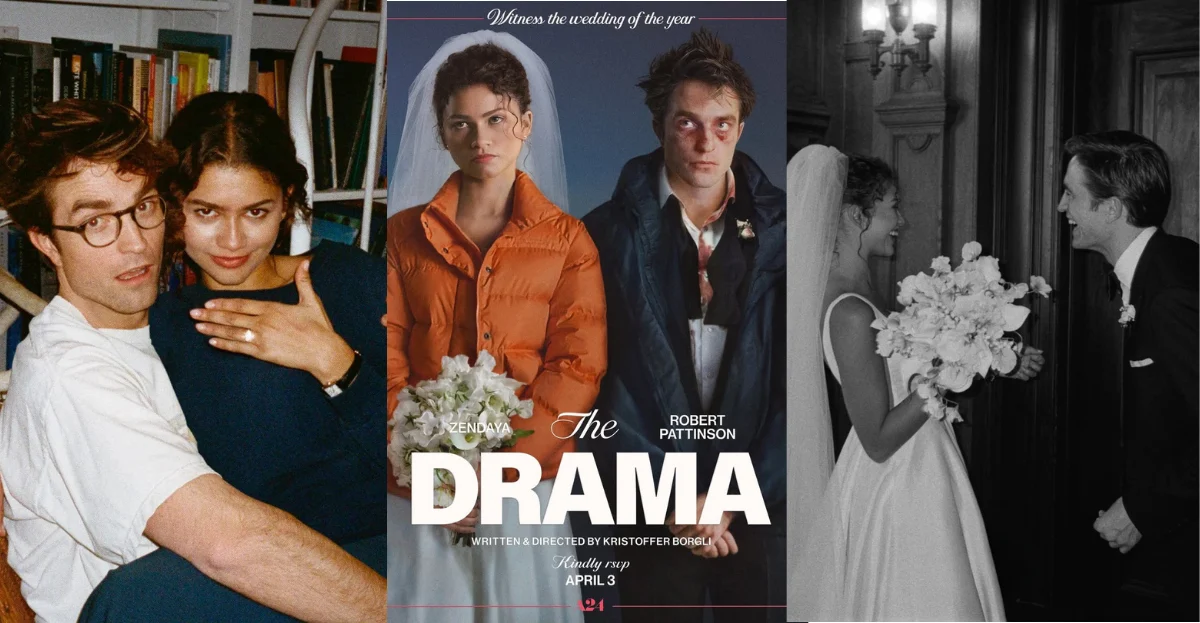
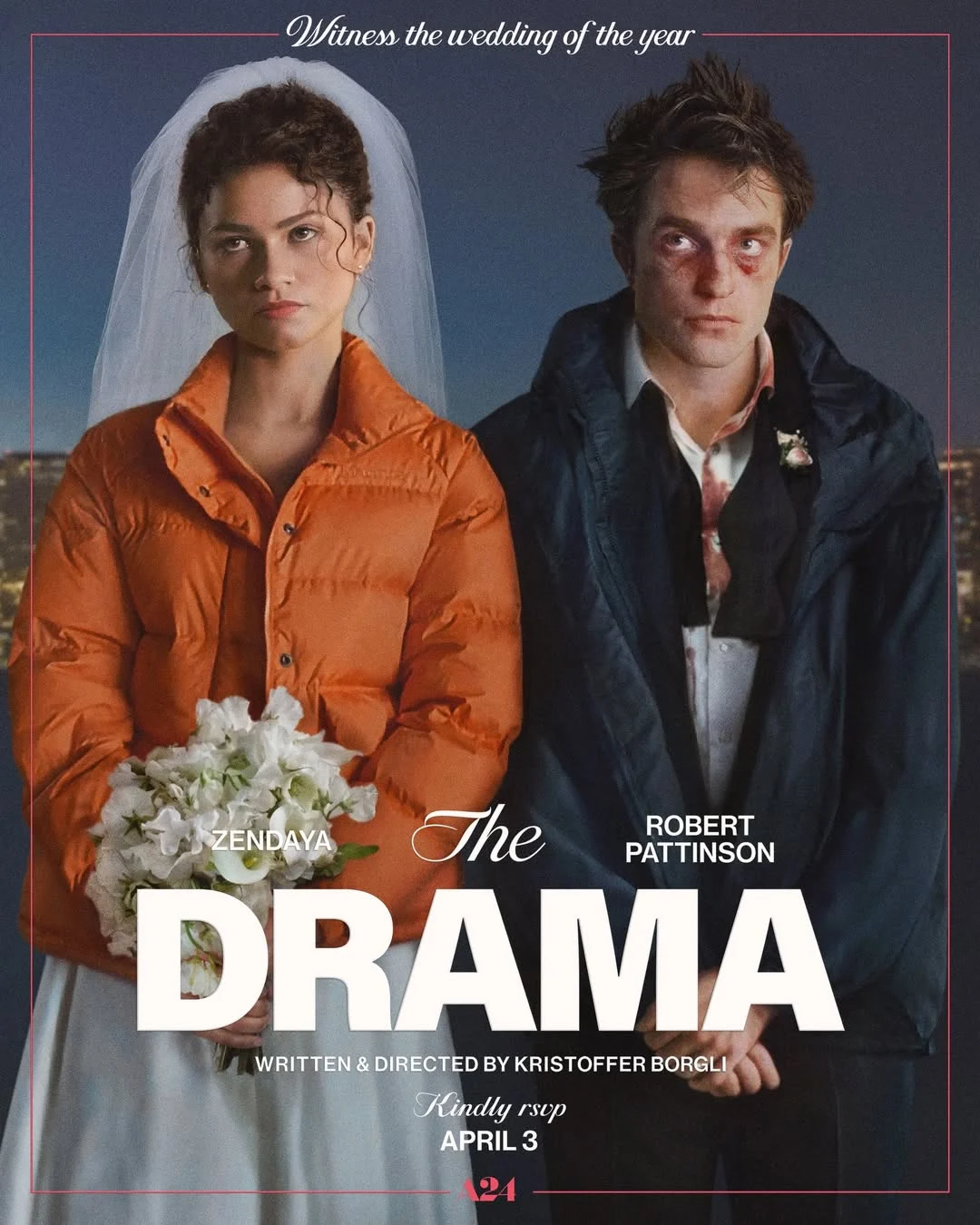
“The Drama” asks for something deceptively simple: unquestioned empathy. And that, more than anything, is what makes it so divisive. Directed by Kristoffer Borgli, the film follows Emma (Zendaya) and Charlie (Robert Pattinson) in the days leading up to their wedding. On the surface, they are perfectly matched—professionally, aesthetically, aspirationally. He’s a museum curator, she’s a literary editor, and together they inhabit the kind of carefully curated New York townhouse that feels lifted from a Pinterest board for artsy millennial domesticity. Their life reads as idyllic, almost to a fault.
The film opens with Charlie rehearsing his wedding speech; earnest, poetic, moving enough to bring his best friend Mike (Mamoudou Athie) to tears. In recounting how he first met Emma, Charlie is immediately framed as the endearing soft boy archetype: slightly awkward, disarmingly sincere. He approaches her in a coffee shop, fumbling through conversation; initially speaking into her deaf ear, a plot-point that plays as charming rather than careless. When Emma gently suggests he start over, he does, and just like that, they click. Their early relationship unfolds through a series of warm, picturesque flashbacks, building a romance that feels both intimate and cinematic. Even when Charlie admits he lied about reading the book that sparked their first conversation, using it as a means to approach her, it registers less as deceit and more as a harmless, even lovable flaw.
But the film is careful in how it constructs perception. What first appears charming begins, slowly, to shift.
In a parallel thread, Emma discusses her own wedding speech with her Maid of Honour, Rachel (Alana Haim), who cautions her against being too emotional– “Crying makes you look kinda ugly.” What might pass as a flippant joke lands with an edge, hinting at something sharper beneath Rachel’s exterior. This tonal tension deepens when Emma fondly recalls her first kiss with Charlie– locked inside his museum after sneaking in together, the alarm blaring– as romantic, while Rachel reframes it bluntly: “He trapped you.” It’s here we begin to see how perspective operates as a quiet antagonist in the film.
This idea carries into a dance rehearsal scene, where Emma and Charlie clash for the first time. Their choreographed routine is technically sound, but while Charlie insists on perfecting every movement, Emma pushes for spontaneity, for feeling. “It’s a wedding,” their instructor, (Celia Rowlson-Hall) reminds them. “It’s performative by nature.” The line lands as both commentary on the spectacle of weddings and a broader reflection on relationships themselves: constructed, rehearsed, negotiated.
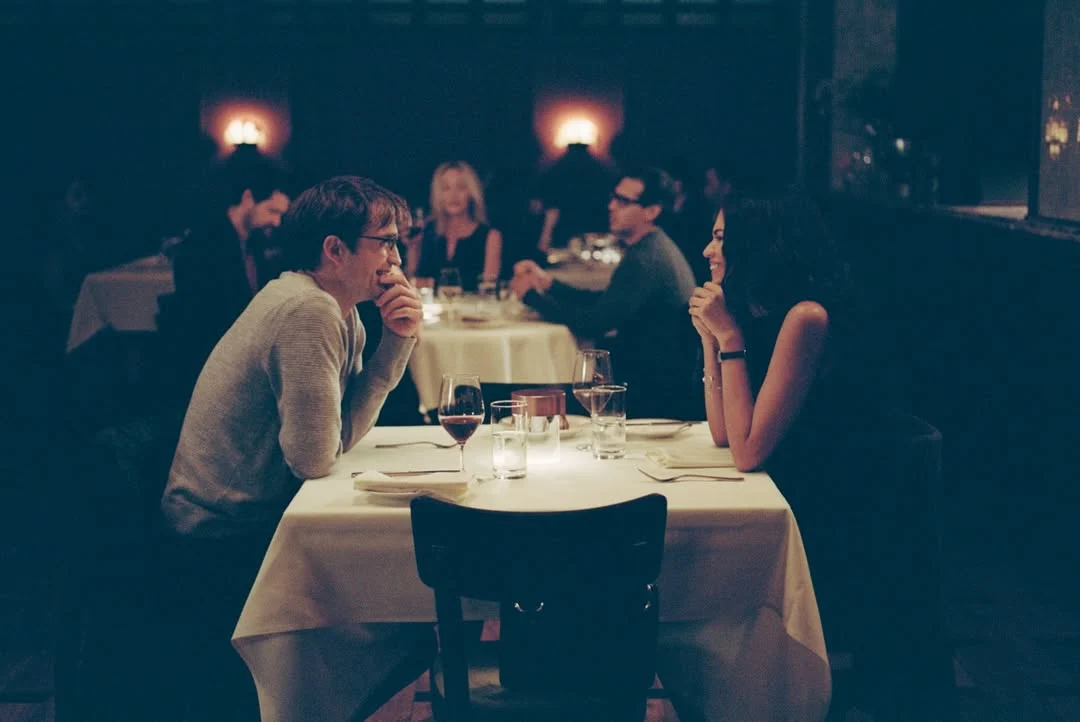
The film’s central conflict emerges as an inevitability. At a pre-wedding dinner with Mike and Rachel, a casual debate about whether to fire their DJ spirals into something far more revealing. Emma hesitates, suggesting compassion: what if they caught the DJ on her worst day? The others disagree. In their world, being caught necessitates consequence. Empathy, it seems, is conditional.
Rachel introduces a game: “What’s the worst thing you’ve ever done?”, a supposed bonding exercise she claims brought her and Mike closer before their own wedding. What follows is a series of confessions that expose the moral elasticity of each character. Mike admits to using an ex-girlfriend as a human shield during a dog attack. Rachel recounts locking a “slow” child in a trailer overnight, dismissing it as a thoughtless act of youth. Charlie shares that he cyberbullied a classmate into moving away, expressing genuine remorse.
Then it’s Emma’s turn.
She reveals that, at 14, she planned a school shooting. She had access to a weapon. She intended to follow through. But she didn’t.
The shift in atmosphere is immediate and irreversible. Rachel is the first to respond, invoking her cousin’s disability as a way to centre herself within the narrative. The conversation fractures. Emma attempts to contextualise– explaining the bullying she endured, her fixation on the aesthetics rather than the violence, the moment that ultimately stopped her– but the damage is done. Empathy, once freely extended to others, is abruptly withheld from her.
What follows is the emotional core of the film: Emma and Charlie, alone with the weight of this revelation. Through striking match cuts that blur memory and imagination, we see Emma’s past unfold alongside her present, her trauma, her near-mistake, and the life she built in response to it. Her deafness, revealed to be the result of mishandling a rifle, becomes a permanent echo of who she once was. Her activism against gun violence becomes her atonement.
Emma has done the work. The film makes that clear.
But “The Drama” is less interested in redemption than it is in whether redemption is enough.
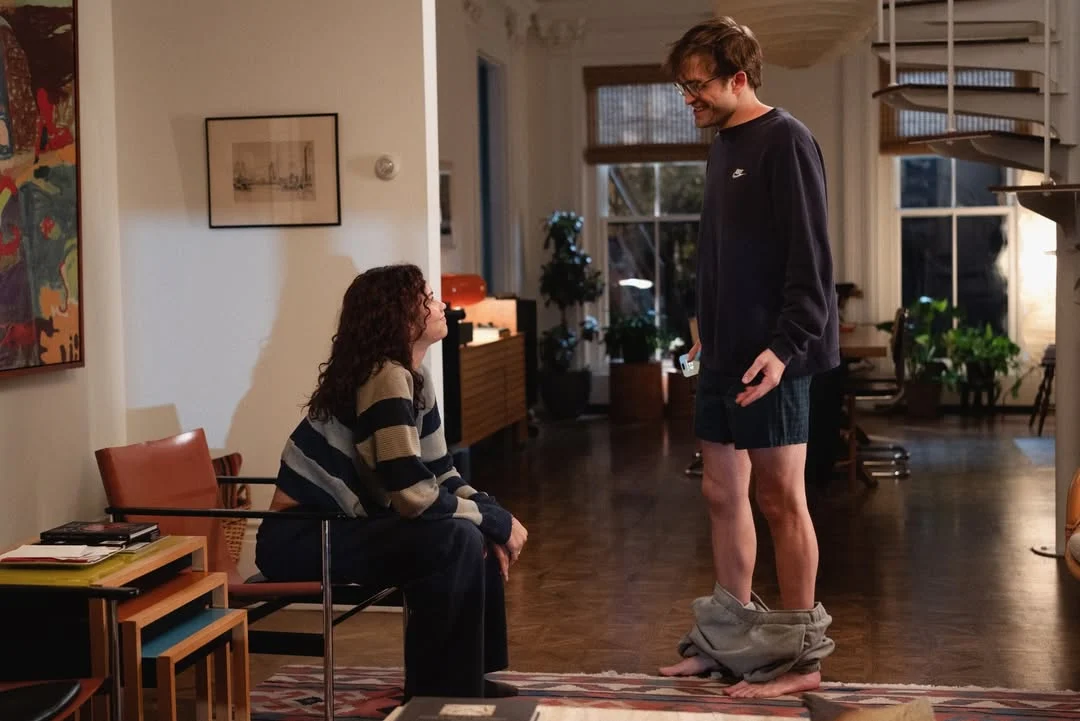
Charlie struggles to reconcile the woman he loves with the person she almost became. He searches for frameworks, asking friends, colleagues, and anyone who might offer a definitive answer, but none exist. His confusion mirrors that of the audience. What does empathy look like when the harm is hypothetical but the intent was real? Is it more important that Emma planned it, or that she didn’t go through with it? And who gets to decide?
Rachel, meanwhile, becomes the film’s most incisive character study. At once antagonist and comic relief, she embodies a selective morality that thrives on perception. She demands empathy for herself while denying it to others, weaponising information to maintain her social standing. Her own past, arguably the most disturbing, is reframed as trivial, while Emma’s becomes unforgivable. It is hypocrisy, sharpened into performance.
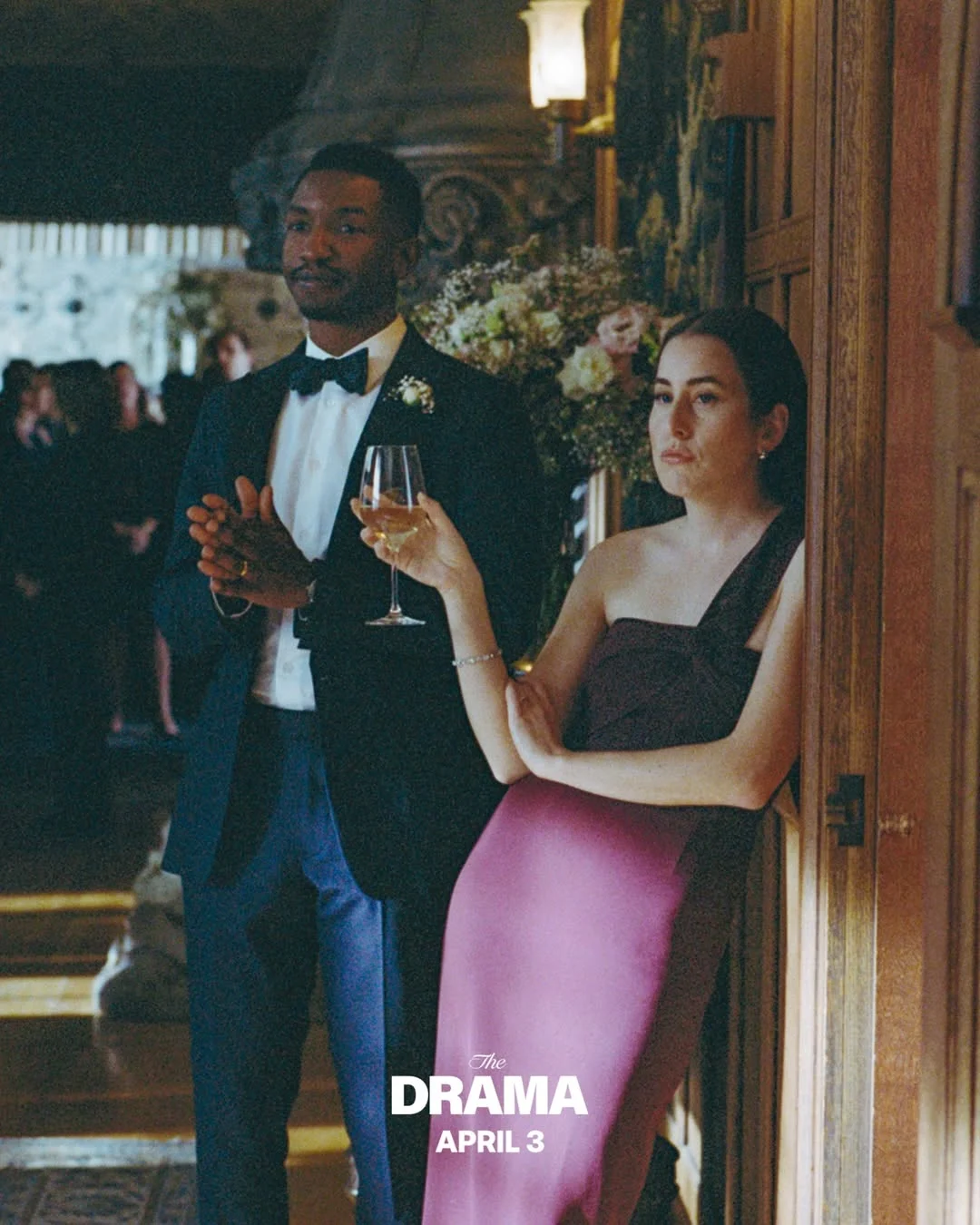
Charlie’s own moral standing begins to erode. He cheats on Emma, briefly, impulsively, and later humiliates her in a rambling wedding speech that exposes their private struggles. Yet the film lingers on his turmoil, often at the expense of Emma’s. Despite being the emotional anchor of the relationship, Emma is repeatedly asked to manage, to soothe, to reset. “Start over,” she tells him, again and again and again, granting him the grace he struggles to extend to her.
This imbalance feels intentional, if frustrating. “The Drama” positions Charlie as a proxy for the audience, forcing us to sit with his discomfort, his inability to reconcile empathy with judgement. But in doing so, it risks sidelining the more compelling narrative: Emma’s.
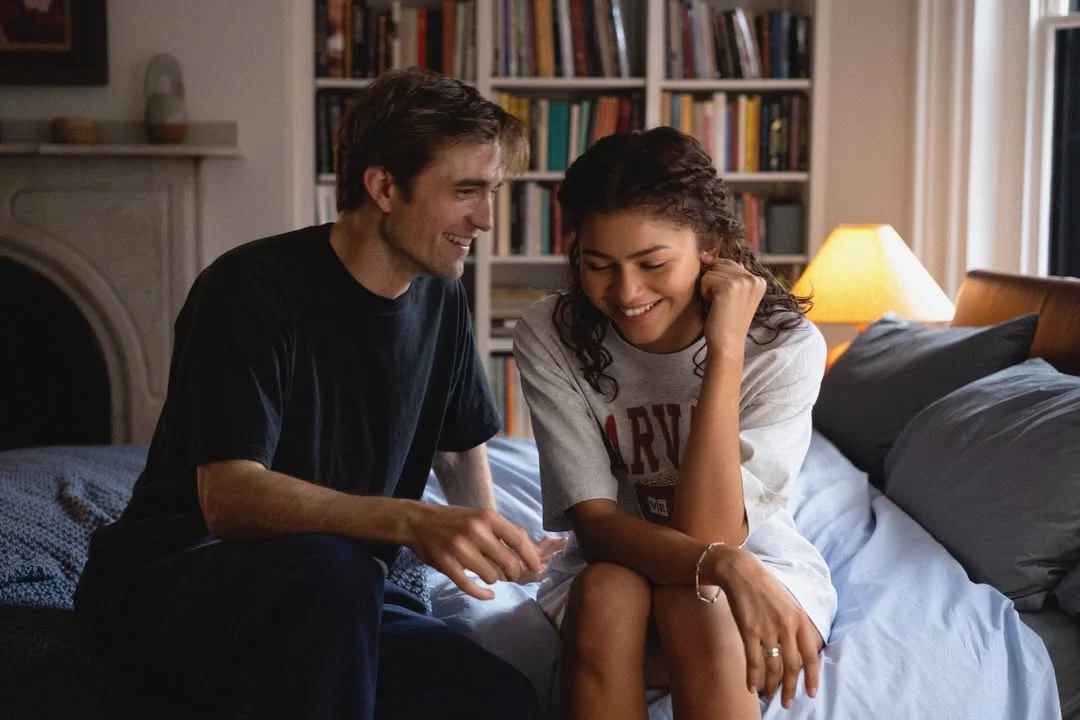
Still, the film succeeds in what it sets out to do. It is both an engaging relationship drama and an unsettling exploration of empathy as a social currency; who deserves it, who withholds it, and why. Anchored by deeply affecting performances from Zendaya and Robert Pattinson, the emotional weight of the story never feels unearned.
In its final moments, the film returns to intimacy. Emma and Charlie, still in their wedding clothes, sit in a diner, physically and emotionally worn down. And once again, Emma extends her hand to start over.
The post “The Drama” Review: To Forgive & Not Forget appeared first on Hype Malaysia.


0 comments:
Post a Comment