
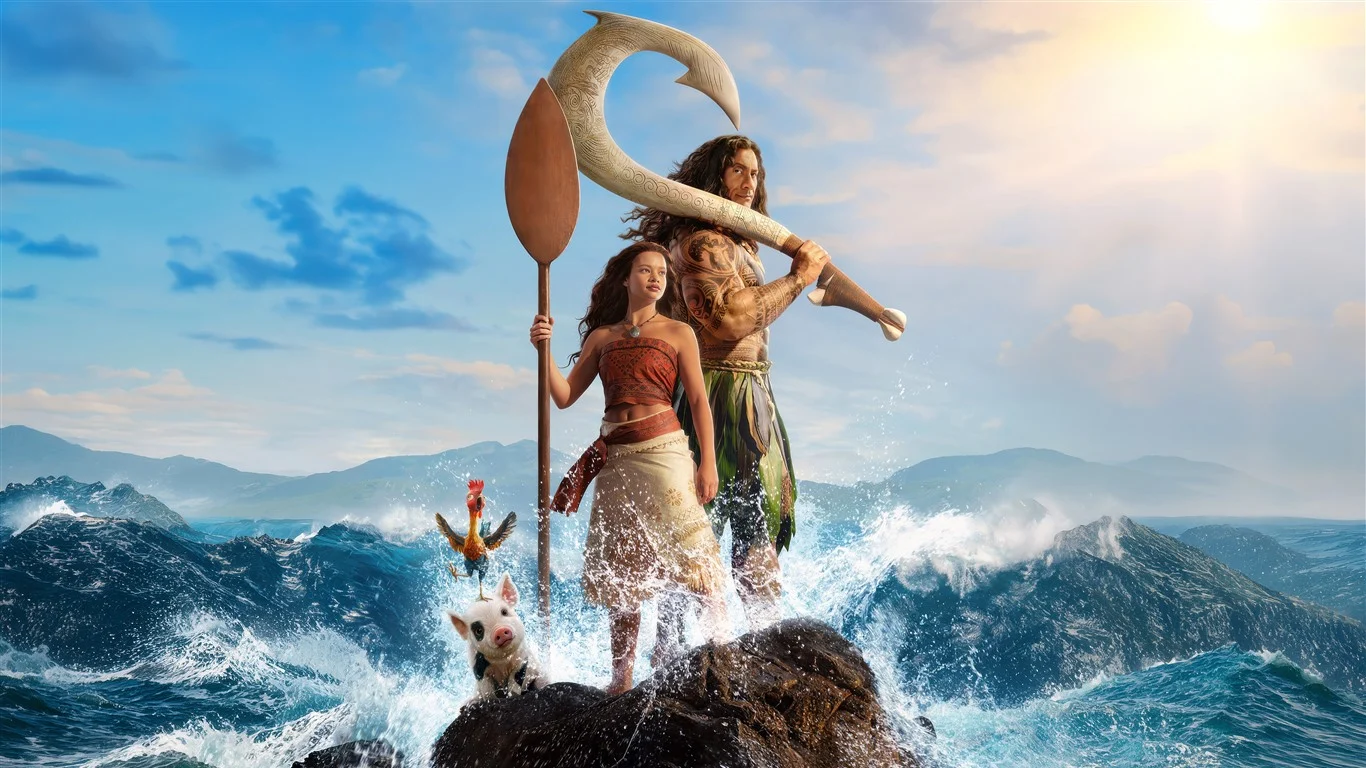
After the seemingly endless run of live-action remakes, the next great idea for Disney is apparently… a film that hasn’t even hit its tenth birthday?
Yes, really. We punched in the numbers.
Truly, this year’s live-action adaptation of “Moana” occupies a strange little category all its own. The original set sail for cinemas in November 2016, back when Disney’s confectionary of bright ideas was just ramping up its nostalgia machine with “Cinderella” and then “Pete’s Dragon.”
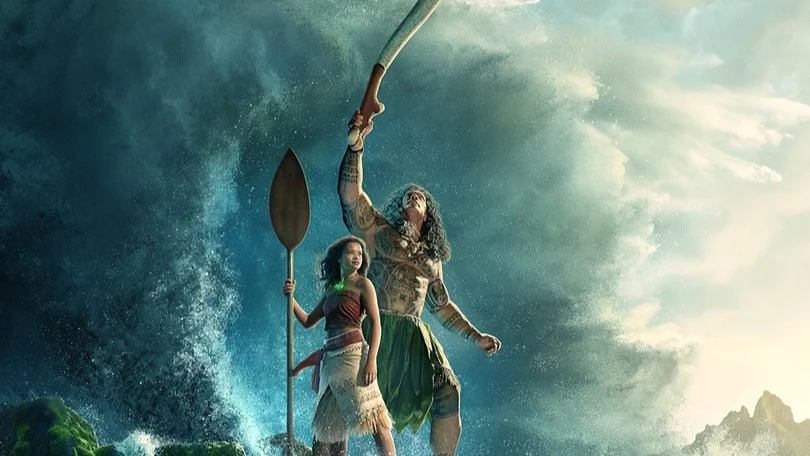
Ten years on, Disney’s timed this release to land just short of that anniversary, though, funnily enough, it wasn’t originally supposed to cut it this close. This one was meant to arrive in June last year before getting bumped, and somehow we got a surprise “Moana 2” at the tail end of the year before that, a movie that was meant to be a series on Disney+ right before the studio realised they needed a box office win. Go figure.
Unlike “Lilo & Stitch,” a remake we found ourselves enjoying fairly enough despite our better judgement, “Moana” doesn’t get the benefit of distance. There’s no decade of hazy childhood memory for this redo to capitalise on quietly.
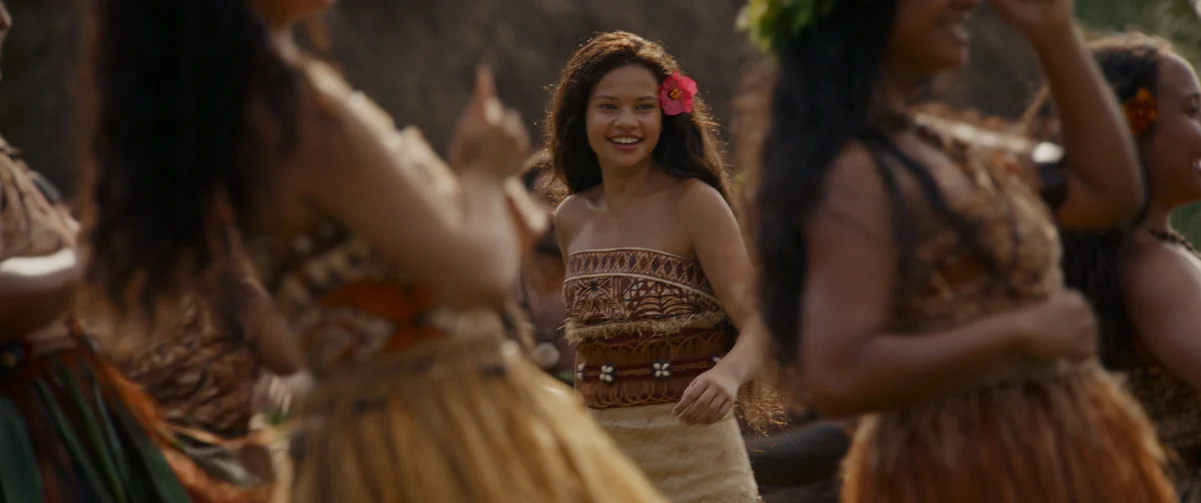
But what it does have is a nine-figure budget north of $200 million (gasp, that’s the number for “The Odyssey”), Dwayne Johnson reprising Maui in the actual flesh, this time with a Weird Al Yankovic wig. Newcomer Catherine Laga’aia is stepping into a role that Auli’i Cravalho, now an executive producer here, deliberately stepped back from to make room for.
Every time a live-action remake comes out, there is always the question of whether the adaptation will earn its place in history. Despite their tenacity over these years, these adaptations aren’t infallible, of course. Look at “Snow White,” which, to be fair, had a whole pile of other external cultural problems working against it.
But even reviews like this one going out into the world won’t change what the box office tends to decide. Just like the rest of the live-action remakes before it, this one isn’t going to change your mind, whichever side of the debate you’re already on.
So, in the end, how far does this live-action remake go?
Here’s the thing: Maui may be talking about moving lands from beneath the sea, roping out islands and the like, but over here, the story barely moves an inch from the source. Whether that’s a good thing or a bad thing depends entirely on how generous you’re feeling. Nothing here is reinvented so much as reupholstered. We’re looking at the same skeleton wearing a slightly more expensive coat of paint.
But the real question isn’t “what happens next” (you already know); it’s whether that new coat was worth the cost of putting it on at all.
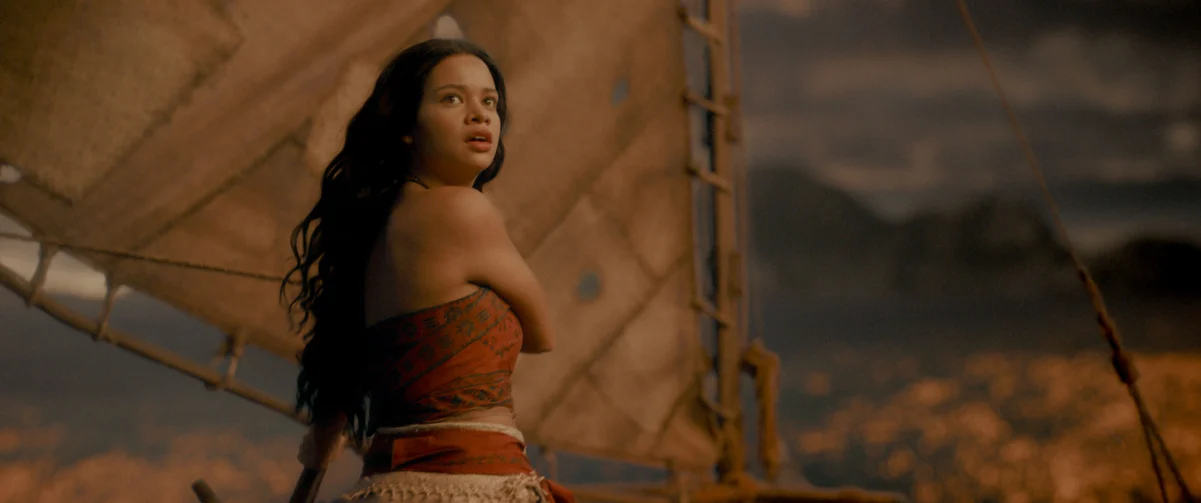
Spoiler alert: Moana is still the headstrong daughter of Chief Tui. She’s still drawn to an ocean her father insists she stay away from, still watching her island starve as the fish disappear and the crops fail while everyone shrugs and blames the reef. Her grandmother Tala still hands her the one piece of information that cracks the whole thing open: their people were voyagers, once, before Maui stole the heart of Te Fiti and cursed the sea behind them.
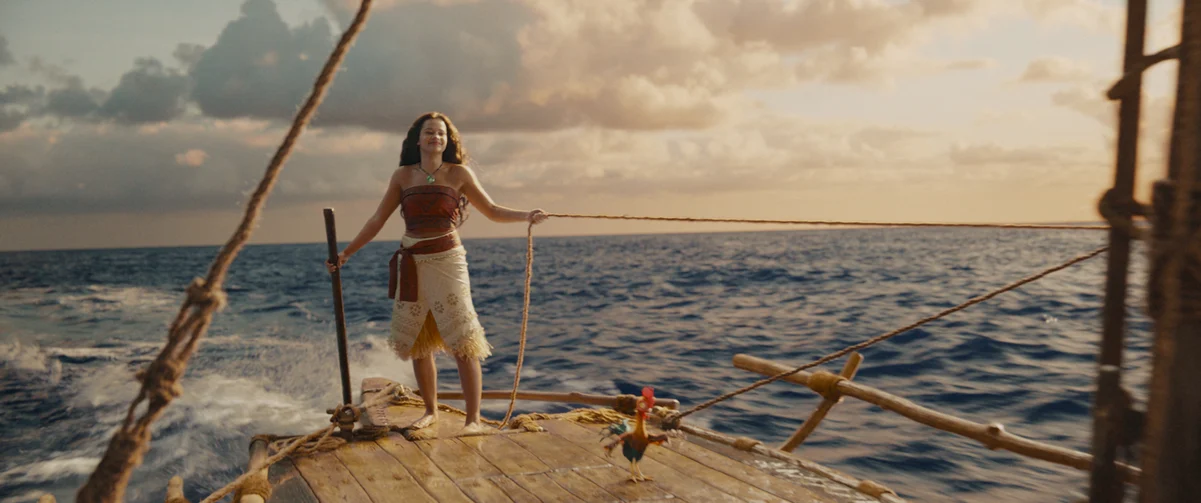
Every plot beat lands exactly where it did in 2016. Silly chicken Hei Hei still finds its way on board her boat, she still finds Maui sulking on his island prison, still visits Tamatoa’s glittering underwater lair, and ultimately squares off against Te Kā at the edge of the map.
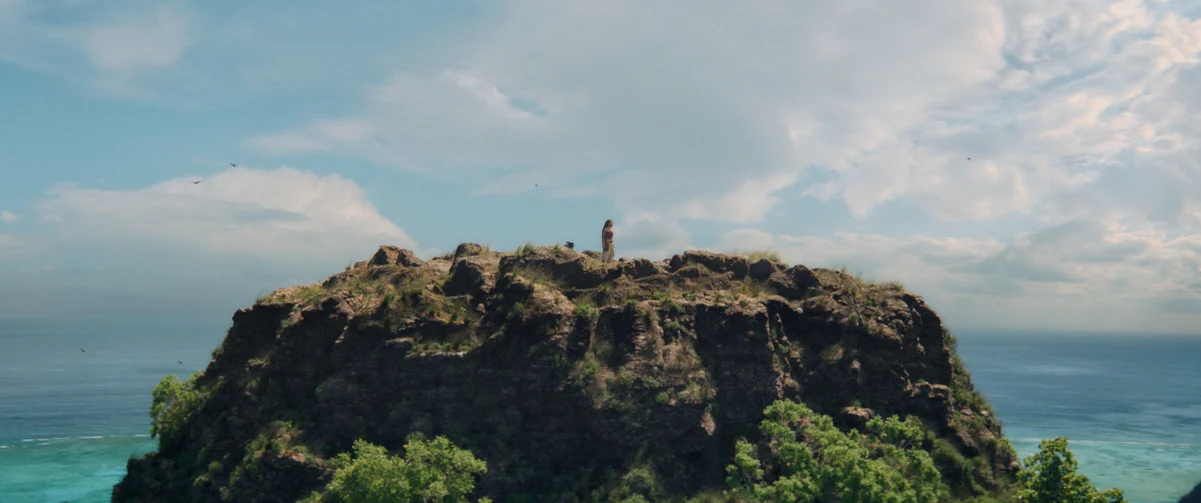
However, despite all that money and pedigree, the film in front of us looks less like a glossy reimagining and more like somebody forgot to colour grade the footage to its fullest. Where are the lights? Sure, some colours pop, mostly whenever the plot demands a sunset or a burst of bioluminescent magic, but chee-noooh, plenty of scenes, especially the ones set at night, sit in this dull, drab murk.
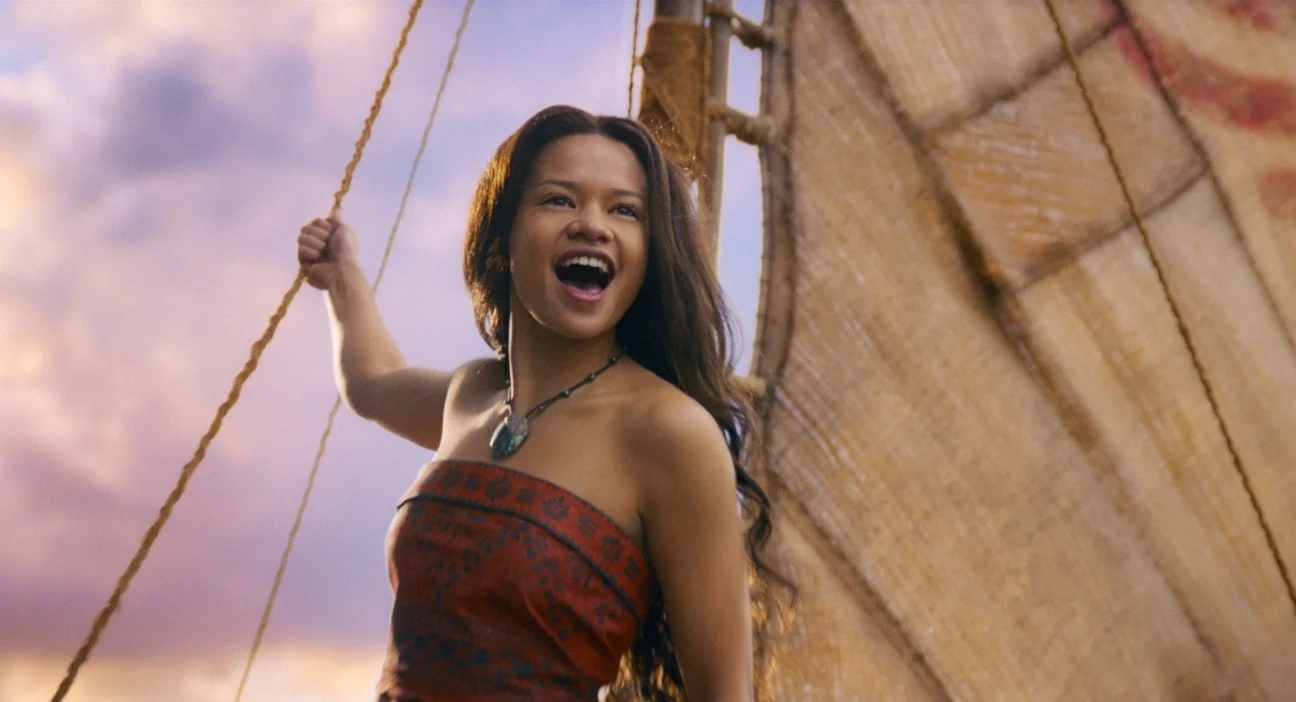
Catherine Laga’aia, at the very least, does well as the titular Moana, encompassing what you’d want from the headstrong chief’s daughter. She’s got the physicality down, the paddle work, the storm-tossed scrambling, the sheer stubbornness in how she carries herself against her father’s wishes.
But it’s also in the quieter beats where she earns her keep, the moments of doubt before the big swells of courage, the flickers of a teenager who’s in over her head and knows it. It’s a performance that understands Moana isn’t just meant to be plucky; she’s meant to be scared and go anyway. Laga’aia gets that distinction right, even when the film around her doesn’t always give her the space to fully sit in it.
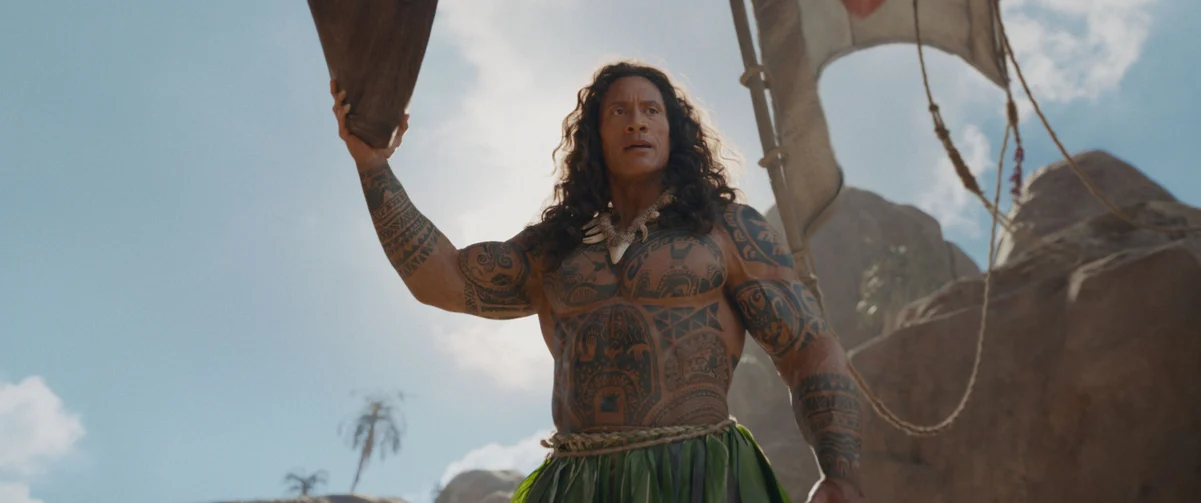
Now, about Weird Al wig-donning Dwayne Johnson. Something is off here. It’s less “demigod of wind and sea” and more “unc Maui,” a guy going through the motions of charisma rather than actually radiating any. Indeed, it’s a noticeable step down from the loose, self-aware energy he brought to the character in voice form. What happened here?
It’s a tough act to follow Maui in animated form, but come on. Dwyane has the expression befit of a rock in this film.
Was Mr Johnson brooding? Was he still channelling Black Adam in this less-than-stellar Maui cosplay? Was he afraid that the hierarchy of the Disney live-action films was about to change? It seemed more like Dwayne couldn’t handle that someone else could take this role and do it better than him, and as such, decided to be this washed-up version of a character that had a lot of goofy in his veins.
You know the scene where he turns into a shark with human legs, and starts musing about “Shark Head”. Well, what do you know, this version is actually more animated than Dwayne himself, which is hilarious.
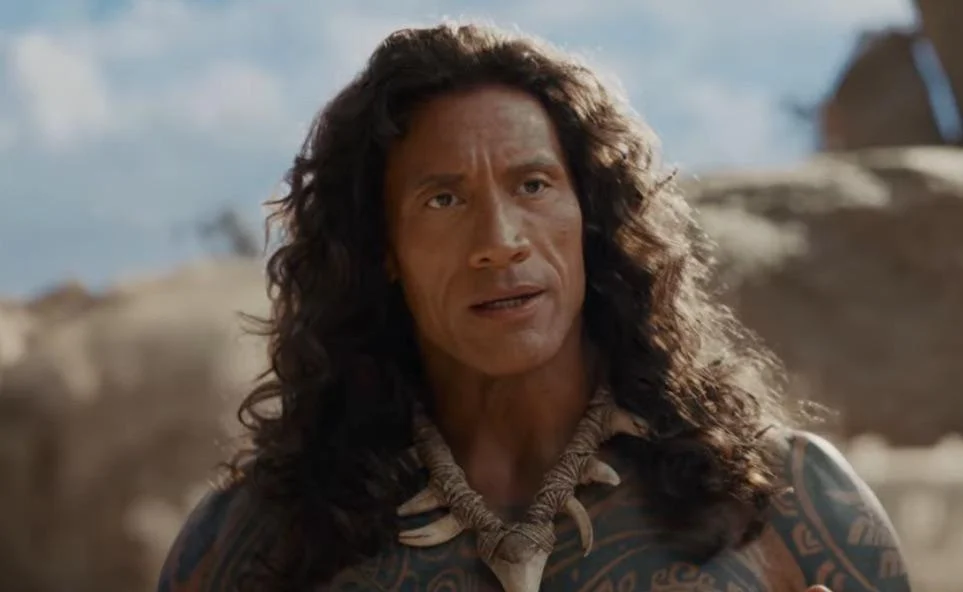
As a matter of fact, we dare say that Jason Momoa, goofy “Minecraft” performance and all, might genuinely have had more fun if he were cast here than Johnson does here.
That flatness also bleeds into how the film handles its quieter, more mythic beats. Take the early scene establishing Moana’s bond with the ocean, sheltering the turtle, the water parting for her like it recognises something in her before she does.
The animated version lets the moment breathe, lets the magic of it sit with the audience before moving on. Here, it’s treated like a box to check. In, out, next scene. The same can be said when Moana and Maui first enter Lalotai, where they don’t even show the potential horrors that might befall our protagonists. Whether that’s a budget issue or a pacing choice, the effect is the same: a moment that’s supposed to feel like wonder ends up feeling like a formality.
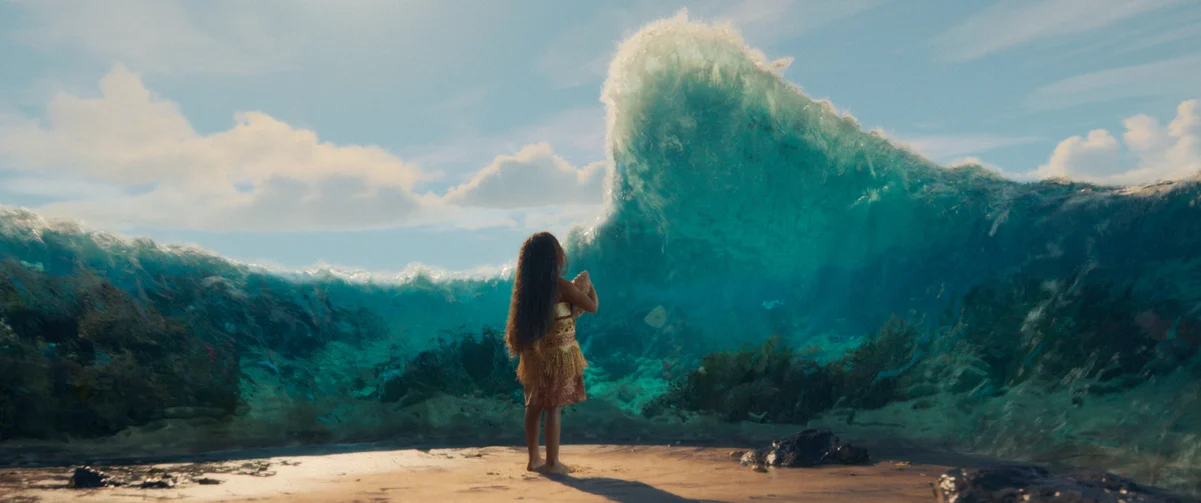
Most of the film, to be fair, is a faithful shot-for-shot recreation, and the smallest tweaks don’t hurt anything.
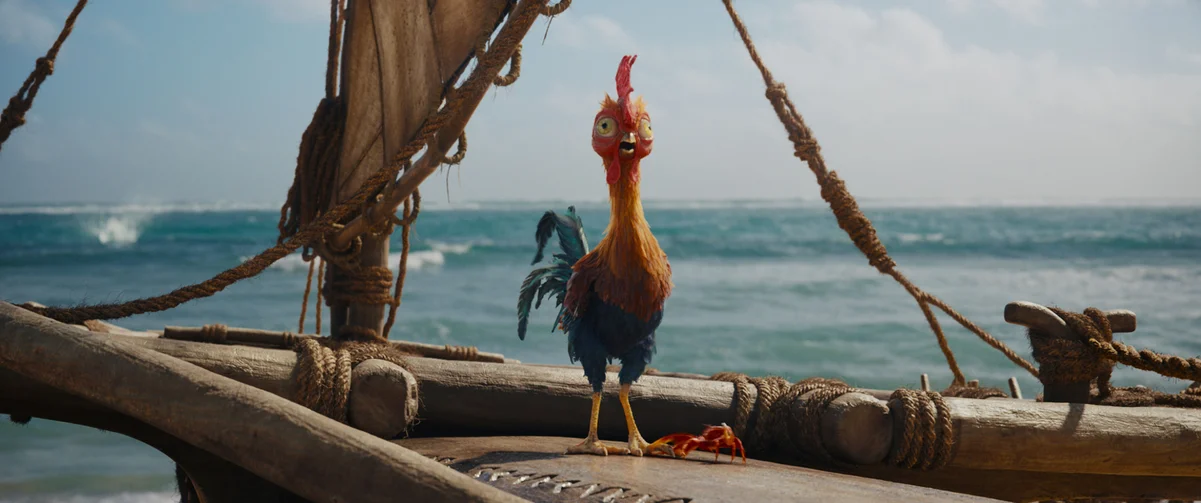
For example, Heihei still falls off the boat, though he never flips upside down like two drumsticks in soup, presumably because that’s not something real chickens would do.
Yet, some of the tweaks quietly undercut what made the original work.
Like in the climax, when Maui’s hook is damaged in the skirmish with Te Kā, the animated film intentionally frames him from the back, withholding the damage for a beat, letting the dread build before revealing what’s actually wrong.
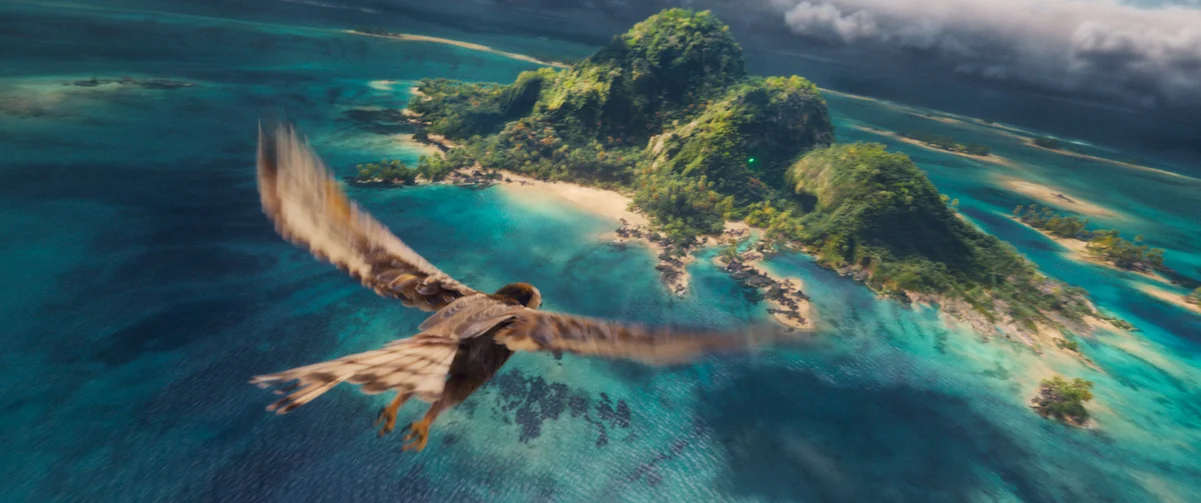
The live-action version shows us the damaged hook pulsating with electricity immediately, and Johnson just leans against the post like a man who’s lost interest in a toy he never wanted anyway. Why deliver the information straight to your audience? Have we stooped so low that we cannot appreciate or decipher scenes and tension on our own?
Sure, these examples may seem like we’re putting this movie on a slide and under the lens of a microscope. But when you remake something, especially something that’s generally recent, the memory of the predecessor is going to invite scrutiny.
Here’s the part where we’re contractually obligated to ask why these remakes exist at all, and here’s the part where we’re contractually obligated to already know the answer. Nostalgia sells. It has sold for over a decade at this point, and it will keep selling long after this.
The cycle is practically self-sustaining now. A studio’s investors need their money, so they dust off a beloved animated title and slap a live-action coat of paint on it. The internet collectively reaches for its pitchforks, decries the lack of originality, and asks why and who asked for this. Yet, the film releases anyway. And more often than not, it makes money regardless, because nostalgia doesn’t actually care how loud the discourse gets. So the studio, vindicated, reaches for the next title on the shelf. Rinse and repeat.
“Moana” just happens to be the version of this cycle that arrives embarrassingly early, a live-action remake of a film that isn’t even old enough to drink whatever poisons the makers might have been on. But “too soon” is really just a more specific flavour of the same complaint that’s been lodged against every one of these remakes since “Cinderella.”
It’s an ouroboros with a very predictable diet. And if this one performs the way these things usually do, we already know what’s coming next. The discourse dies down, the box office numbers get quietly celebrated in a boardroom somewhere, and Disney adds another title to the queue.
Yet, shot-for-shot fidelity isn’t the problem. “How to Train Your Dragon” proved that last year. It was the same story, same beats, same emotional peaks, translated almost scene for scene into live action, and yet that film still managed to feel alive. The difference isn’t in what was adapted, but how.
The makers of “How To Train Your Dragon” understood something in knowing when to let a scene breathe and holding space for emotion. Knowing when to hold on a face a beat longer, when to let the camera drift and let the audience sit inside a moment instead of just checking it off.
“Moana” has all the same ingredients on paper, but lacks some of the patience. It sometimes rushes past the exact moments that made the original soar. Shot-for-shot doesn’t have to mean soulless. “How to Train Your Dragon” is the proof. And “Moana” over here is a bit of a counterpoint.
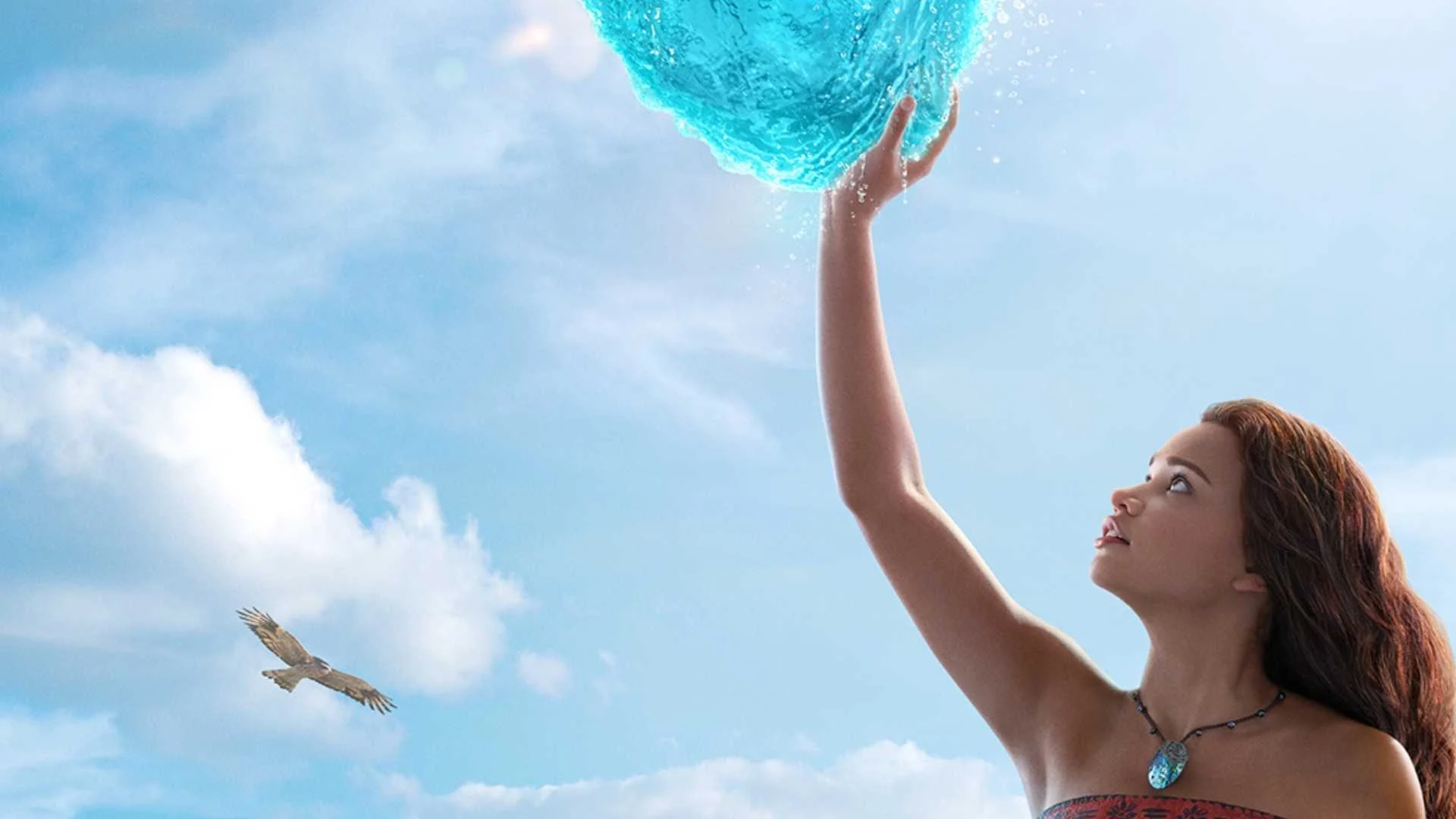
Again, how far will the live-action remakes go? Judging by “Moana,” not very much.
It’s baffling to see how this movie had such a massive budget for an end product that’s generally mediocre. It’s not like there wasn’t effort placed here. Somewhere in that budget is a real production, real location shooting in Hawaii, real costume work, a real cast giving it a genuine go (maybe not Dwayne). But money spent isn’t the same as money well spent, and the film does many things on a level that simply cannot match its predecessor, animated or not. Nine figures and it still can’t out-glow a cartoon. Simply put, it’s content to exist on its own island as it is… and not sail beyond the reef. Ironic.
Disney’s “Moana” is currently playing in theatres.
The Review
"Moana" (2026)
A shot-for-shot remake that mistakes fidelity for faithfulness. Catherine Laga'aia shines, but Dwayne Johnson's flattened Maui and the film's refusal to let its own magic breathe keep this "Moana" stranded just short of the wide ocean.
The post “Moana” (2026) Review: A Remake That Never Quite Leaves The Shore appeared first on Hype Malaysia.


0 comments:
Post a Comment