This is slide 1 description. Go to Edit HTML and replace these sentences with your own words. This is a Blogger template by Lasantha - PremiumBloggerTemplates.com...
This is Slide 2 Title
This is slide 2 description. Go to Edit HTML and replace these sentences with your own words. This is a Blogger template by Lasantha - PremiumBloggerTemplates.com...
This is Slide 3 Title
This is slide 3 description. Go to Edit HTML and replace these sentences with your own words. This is a Blogger template by Lasantha - PremiumBloggerTemplates.com...
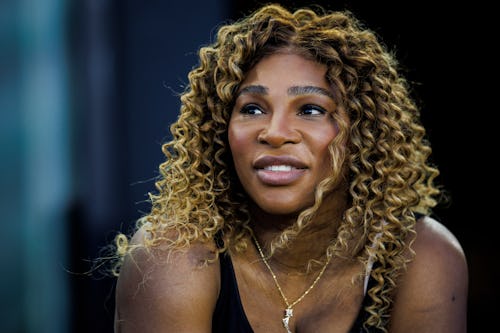
— Paul Archuleta/Getty Images Entertainment/Getty Images
Former Olympic gymnast Shawn Johnson East just welcomed her third baby, a little boy, mere days before Christmas via C-section. As this was her third C-section, the busy mom of three admitted during a recent Instagram Story Q&A that it was her “hardest but smoothest” yet due to extra scar tissue and a whole lot of soreness during her recovery. Despite the extra soreness, Johnson refused to take any pain medication for an important and personal reason.
Johnson, who is also mom to 4-year-old daughter Drew and 2-year-old son Jett, opened up on her Instagram Story about her recovery after giving birth on Dec. 12. She admitted that she experienced a lot of “discomfort” after her birth experience, but was not willing to take any kind of pain medication because of her past struggles with Adderall addiction.
“Feeling great now though. I also refuse all pain meds haha (they make me SO sick and frankly after being addicted to adderall it just scares me so I don’t even mess with it,” she explained on her Instagram Story. “Long story short, during my comeback in 2010 I was prescribed adderall to ‘curb my appetite and give me more energy’ by a not good doctor.”
“Fast forward 7 years of being heavily addicted to it and having it control me, when I finally freed myself of it I swore anything even remotely addictive I’d stay away from,” she continued. “It affected every part of my life and changed who I was. I never want to feel out of control like that again.”
This isn’t the first time Johnson has referenced her former addiction issues. Back in 2020, she opened up in a YouTube video, Body Image Issues: 110 Lbs. to Pregnant, about how her struggles with body image issues eventually lead her to taking Adderall in 2010.
“I went through this dark kind of spiral of a few years on terrible medications and drugs that tried to ‘spike my metabolism’ and did nothing. I took diuretics, I did every fad diet. I remember I went through a three-week phase where I ate nothing but raw vegetables,” she said at the time. In fact, she was initially worried that her first pregnancy might trigger a backwards spiral, but found the opposite to be true. “There was something that switched when I got pregnant, where it was no longer about me or my body or the vanity or the calories or what I looked like or what I weighed,” she said in 2020. “I couldn’t have cared less. It was about protecting my baby. And I was so excited by that.”
Fortunately, Johnson has been able to move on from her earlier addiction to Adderall. While she didn’t want to take any stronger pain medication, she did say that she was able to take Tylenol or Motrin which hopefully helped alleviate some of her pain. And certainly she and her husband Andrew East were overjoyed to welcome their third child, son Barrett “Bear” Madison East, and Johnson admitted in a recent newsletter for the couple’s Family Made website that she is learning to take her time with her recovery after Bear’s birth.
“Recovery is always a process and I’ve learned to be really patient with my body,” she wrote. “Not trying to rush anything and really just going to soak it all in. The third time around feels so surreal because even though we’ve done this twice before, there’s still so much nervousness and excitement around the days leading up to the birth and then so much magic once you get to hold your sweet baby in your arms for the first time.”
It wasn’t an easy road for Johnson, especially since she felt she needed to refuse pain meds during her recovery. But now her baby Bear has arrived. And hopefully her recovery is coming along, with or without pain medication.
Serena Williams is doing double duty as a mom these days in more ways than one. Yes, she is now mom to not just one but two sweet little girls ever since she and husband Alexis Ohanian welcomed baby girl Adira River back in August. Beyond that, the tennis great is multi-tasking like the absolute champion we know her to be, simultaneously keeping an eye on 6-year-old daughter Olympia as she helps her baby sister “work out” while also teaching her to speak French. It’s a lot to pull off in a short video, but of course Williams manages it like it’s no big deal.
Williams took to Instagram on Christmas Day to share a short video of her spending time with her daughters, Olympia and Adira. Olympia, who we all remember was incredibly excited to be a big sister when her parents told her that Williams was pregnant back in May, was sitting on the ground in front of baby Adira, pulling her up to standing while saying “Yay” proudly. At her side, Williams was telling her daughter to go slowly in French, saying over and over again “doucement” (which translates to “softly” or “gently”) until Adira was safely laying back on the ground, at which point Williams told her daughter “like that” in French. Olympia nodded, clearly understanding what her mom was saying, and this family is really getting it all done on so many levels.
“We all work out in this family,” Williams captioned the video.
Williams’ fans couldn’t help notice how impressive the mom of two was in her video. As one follower noted, “What????? I had no idea Serena spoke French! What a pleasant surprise! Such a beautiful family.” Some of Williams’ followers already knew that Williams spoke French after watching her at the French Open, and indeed she has actually spoken French with Olympia in the past on social media.
You’re at daycare drop-off or a playdate or chatting with a mom friend when someone mentions taking their kid to dance this weekend. Dance? They’re toddlers. Shoot, are you supposed to be enrolling your child in extracurriculars already? If you think your kid would like learning dance (or they’re old enough to have requested lessons themselves), then you’ve probably wondered, what is the best age to start ballet? Fortunately, there’s really no single perfect age — and it’s actually never too late to get started.
What is the best age to start ballet?
The short answer is: whenever your child is interested in starting. Some ballet academies offer classes as early as age 2, so if you think your toddler would enjoy getting to move around to some music, sign them up. They’re literally called “movement classes” at most dance studios, says Suzanne Lopez, Abbott Academy director at the Joffrey Academy of Dance.
But you don’t have to enroll your tot by age 2 in order for them to take ballet later. “Our proper pre-ballet training really starts at age 5, which is when I started dancing. I think that’s a pretty typical age for people to start. Our real, you’re-actually-learning-ballet-and-that’s-all-you’re-doing-in-class training really starts at age 8,” she says. “We want people moving early on, but I don’t think ballet is one of those things that if you don’t start it at age 4, you've missed out and you’re never going to catch up. There’s no totally right age.”
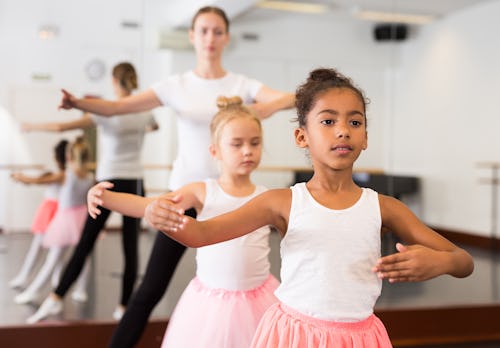
— Shutterstock
What age is too late to start ballet?
The age your child can enroll in classes depends on the academy. At hers, Lopez has a class for beginners where kids can learn the fundamentals regardless of their age, so try and look for something similar if you’re signing up your child when they’re older.
“It’s never too late. Misty Copeland, arguably the most famous ballerina, started as a teenager,” says Lopez. “I think people get to a certain age — I know this definitely happens with sports nowadays — and think if you’re 12 and wanting to start something that you can only ever play for fun. You can’t ever really compete or be on a travel team or whatever. But that’s not the case in ballet. You just have to find a place that welcomes your students at any age and as long as you have that passion for it, there’s a place for you to dance.”
What makes a good ballet class?
If you’ve never danced a day in your life but your child wants to sign up, Lopez recommends you figure out your priorities first to narrow your search. If you just want movement classes near your house, cool. If you want a highly-rated school, or one attached to a professional ballet company, you may have to drive a little further to lessons. Be sure to get word-of-mouth recommendations and read reviews too.
“Do some research. There are a lot of schools out there. Word-of-mouth is also good. Reach out to any families that also have kids in ballet and see where they go,” Lopez says.
So, whenever you decide to enroll your child in ballet is perfectly fine. You don’t have to hustle to get them in right at age 2, or else; even if they suddenly show an interest in ballet at 13, they can still enjoy it and learn everything they need to know.
Source:
Suzanne Lopez, Abbott Academy director at the Joffrey Academy of Dance
There are many ways to decide if your kid needs to stay home from school, but I usually rely on the tried-and-true method: ye olde temperature check. Over the six years of our son’s life on this planet, we have figured out that our kid is a fever kid. Some kids are barf kids, some are snot fountains, but for our firstborn, fevers come on hot and fast to let us know he’s fighting something. Once we’d graduated from the — ahem — way you have to check a baby’s temperature, we used an in-ear thermometer. It seemed accurate enough, but our kid really hated it and (understandably but frustratingly) fought having his temperature taken when he felt crummy.
Then, one fateful day, my technologically-inclined husband was poking around the FSA store and decided to give the Withings Thermo Smart Temporal Thermometer a go. This contactless beauty makes temperature checks a breeze for us and for our kids, and I’m so glad we splurged on it. Yes, it’s pricey, but dropping $100 one time in exchange for many years of easier cold seasons? That’s a price I’m willing to pay.
Pairing: Connects to your smartphone via the Thermo app, available for iOS and Android.
Who it’s for: Everyone. According to the American Academy of Pediatrics (AAP), new research suggests that temporal artery thermometers (like the Thermo) are accurate for children as young as 3 months of age.
When to use: Any time you suspect your child has a fever.
The specs
This snazzy, sleek thermometer is indeed “smart” — as in, it connects to Wi-Fi, sends temperature logs to your phone via Bluetooth (if you want it to) and all of that. But it’s also, thankfully, extremely easy to use. (And yes, your small children will want to play with, so store it up high, my friends.) The Withings Thermo:
Has a truly easy-to-read LED-lit temperature display.
Takes two AAA batteries (and comes with them). The brand says the Thermo’s battery life can last up to two years before needing some new AAAs.
Uses a number of infrared sensors to measure temperature via an artery in your forehead without needing to touch your body.
Measures body temperature based on that artery, which they say is particularly accurate because it flows directly from your core. Studies have found that temporal artery is a valid way to check body temperature in children, and many clinics and hospitals have begun using devices like this because of the comparative ease of contactless temperature checking.
What does “smart thermometer” really mean?
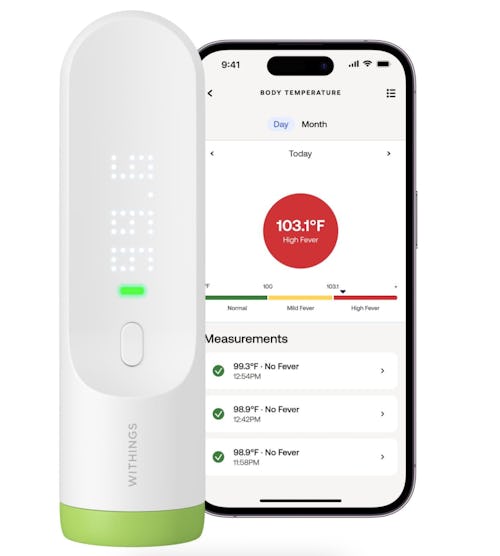
Between you, me, and the Children’s Motrin, the fact that Withings wants me to put their app on my phone so I can use the thermometer to track “up to eight people’s” temperatures and symptoms exhausts me. But if you just love to track stuff and add apps to your phone, more power to you. Withings is right there with you, offering an app that will talk to your Thermo via Bluetooth and keep track of various temperature changes, health notes, and so on. You can create user profiles for as many as eight people who use the thermometer and the app will help you keep track of it all.
— Withings
However, if you are like me and would prefer to just let it all wash over you, you can just use it to take your kids’ temperature (or your own, or your spouse’s), glance at the number, make a decision, and move on. The AAP has been on a campaign for a while now to try to help families understand that, although low-grade fevers are a sign that the body is fighting an infection — and a good reason to keep your kid home from school — they are not an emergency and don’t require treatment (unless your child is very uncomfortable). So, with the help of the Thermo, we can decide if it’s time to watch and wait, or break out the Motrin.
How to use the Thermo contactless thermometer
Unsurprising: temporal artery thermometers are thermometers that measure your body’s temperature via a temporal artery (an artery that is in your forehead). For the most accurate results, you need to have the Thermo’s sensors about a centimeter from your head, then you press the button on the thermometer. When you see the little dots appear on the display, just slowly, steadily run the thermometer across your forehead. Voilà! You’ll see a really easy to read digital display showing the temperature reading. If you’re worried at all that you didn’t quite catch the temperature the first time — maybe your kid wiggled — it’s such a light lift to take it again (in contrast to ear or mouth thermometers).
Thermo also touts that the contactless nature of the thermometer means you can easily check your child’s temperature while they sleep, but I can’t personally vouch for this.
One caveat about temporal artery thermometers, though; some recent research has suggested that they may not be as good at detecting fevers in Black patients, so it may be a good idea to talk with your doctor or health care provider about whether or not the Thermo is a good investment for your own family.
Pros & cons
Pros:
It’s as accurate as an in-ear temperature reading, according to not just the manufacturer, but the AAP.
It’s so easy to use, your sensitive kid will let you check their temperature probably as often as you’d like to.
Using the app, you can easily track your child’s temperature changes and note when you last gave them Tylenol or Motrin. You can also pull up the log to show your pediatrician instead of trying to remember everything on the spot.
Two years is a solid battery life.
Cons:
It’s not the cheapest thermometer out there by a long shot.
There are some studies that suggest temporal artery thermometers may not be the most accurate way to measure temperature in adults, so if you need specific, perfect accuracy, you may be stuck with an in-ear thermometer.
The final verdict
It’s not often that pricey-but-worth-it items, ones that make parenthood just a little bit easier, are available in the FSA store. If you’ve hit the end of the year and you’ve got a little FSA money to burn, you could do worse than burning it on one of these sleek, smart Withings thermometers.
The TL;DR
The Withings Thermo is a splurge-worthy temporal artery thermometer that takes the hassle out of checking your kid’s temperature.
Had To Sharehighlights the products and finds that Romper editors and contributors love so much, we just had to share in the group chat.
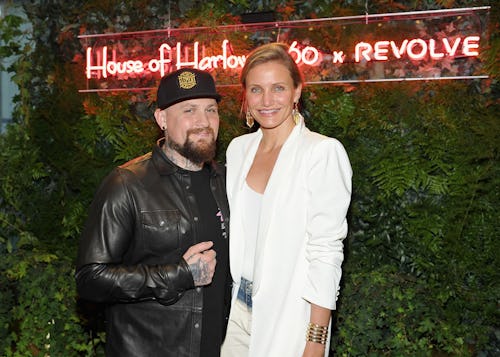
Cameron Diaz has been married to Benji Madden for eight years, and she has some thoughts about what she thinks can help build a happy marriage. The mom of one recently said that she thinks we need to “normalize separate beds” for married couples, even going so far as to say that some people might need separate homes. And she’s certainly making a solid case for this idea.
Diaz was a guest on Molly Sims’ podcast Lipstick on the Rim along with her Avaline business partner Katherine Power, where the two friends discussed their wine company as well as some health and beauty tips. After Sims discussed her husband’s loud snoring with her co-host Emese Gorley, Diaz piped up with a solution.
“We should normalize separate bedrooms,” Diaz, who shares 4-year-old daughter Raddix with Madden, said before taking it one step further. “I would literally, like, I have my house, you have yours, we have the family house in the middle. I will go and sleep in my room, you go sleep in your room. I’m fine.”
The Charlie’s Angels star put so much thought into the idea, she even thought about what to do about sexy time. “And we have the bedroom in the middle that we can convene in for our, you know, relations.”
Now just because Diaz supports the idea of having separate bedrooms doesn’t mean that’s how she and her husband handle their sleeping arrangements. She came up with the idea before she got married. “By the way, I don’t feel that way now because my husband is so wonderful,” she told Sims. “I said that before I got married.”
Diaz might be on to something here, according to sleep specialist Wendy Troxel, who told CNN that many couples are turning to “sleep divorce,” the practice of sleeping in separate bedrooms, to help improve the quality of their rest. “The question I always get is, ‘Is it bad if my partner and I sleep apart?’ The answer is no, not necessarily,” Troxel told the news outlet. “It can even have some significant upsides.” She went on to say that couples who slept in separate bedrooms could make them less resentful, happier, and able to enjoy the time they do spend in bed together more easily.
Certainly plenty of people were reacting to the idea on social media. “I’ve been married 30 years this June. We haven’t slept in the same room for the last 25 years unless we are in vacation. It’s just easier. She likes noise and cold I like warm and silent,” wrote one husband on X, formerly Twitter.
“Why do i kinda agree.. i like to spread out and not be hot all night we can do what we do then go to bed in separate beds,” added another.
While some people seemed to worry about the idea, with one noting, “What’s marriage if you both sleep in different rooms,” there were plenty of people who thought personal space could be healthy for a marriage. “Y'all can still sleep in the same bed if you guys want, But normalize having each others own separate, designated spaces. that's the move,” one person wrote.
Personal space within a marriage does feel like a good idea. And picking out your own bedding and designing your own space and such? That sounds kind of great.
Serena Williams really got into the spirit of giving this holiday season. After a recent visit to New York City, the mom of two donated some of her surplus breast milk to families who might need it. And now some baby out there is going to benefit from her “super soldier” breast milk, so let’s watch this space for a baby who suddenly has an incredible tennis serve.
In a video posted on Instagram, Williams shared that she was “really excited to donate some breast milk that I have left over from my trip to New York to people who really need it.” The tennis champ, who welcomed second daughter Adira with husband Alexis Ohanian in August, shared a video of a freezer full of bags of breast milk ready to be donated and noted that her donation “will be anonymous, but super excited to just help in some way.”
Williams explained in the caption of her video that she had been in New York City with a surplus of breast milk, and opted to donate it rather than bring it home. “On a recent trip to NY I had left over [sic] breast milk. After going through a screening I was able to donate it instead of taking the milk home,” she said. “I know so many amazing women that adopt or are unable to make milk. It felt amazing.
The tennis pro also pointed out that “someone out there is getting some super soldier milk,” and her followers are very excited for whoever that might be.
One follower wrote that “some kids backhand just got stronger,” while another mom asked for some for her teenager, “Can I have some? My 17 year old will have it with her cornflakes (she’s a tennis player and needs this extra Serena Push Power Milk).” One mom said, “With your diet and who you are I would drink that milk myself.”
All jokes aside, several people thanked Williams for doing the important work of donating breast milk, with one parent writing, “This made me teary. My premature twins lived on donated milk for their first month. So grateful for women like you! (and really wish it had been yours!!)”
Even Williams herself has acknowledged the power of her breast milk, using it to try to help soothe a recent sunburn for herself and her 6-year-old daughter Olympia. She said it worked, and obviously we believe her.
My children lost their father five years ago. They were 13, 10, 7, and 7 when he died. He was diagnosed with pancreatic cancer in the summer of 2018, the day before he turned 44, and he died four months later. There is a lot more to be said here, of course, but I wanted to explain this at the top, because once you mention the early death of someone so close to you, you will almost always be asked how it happened. Then you will be asked how someone can help.
Curiosity is normal of course — as is the empathy we all feel for those grieving — but the desire to prioritize one’s curiosity and need to feel helpful over the feelings of grieving people is one of the ways that people can hurt where they hope to help. This is particularly true when it comes to children, who often feel more overwhelmed by those trying to help through their grief than they are by the grief itself.
Few of us are taught what to do with our own grief, let alone other people’s. And while I believe it’s never too early to normalize conversations about death with our children, I also think it’s never too late to know how to differentiate helpful from hurtful language when offering well-intentioned condolences as adults.
Here is my advice, based on my own experience and the experience of loved ones I’ve surveyed — specifically my kids — for navigating grief as a supportive friend or family member. Or even stranger on social media.
Helpful: Sending, giving, and showing love without expecting reciprocation.
I know everyone has a fear of saying the wrong thing, and that can be enough to keep us from saying anything at all. Which isn’t right either. It sounds simple, but if you or your child ever wonders what to say to a child, friend, or family member in the throes of loss, “I love you and I’m thinking of you,” is all you need to know how to say. Whether those notes are written in a note, in sharpie on a hand, or whispered in their ear during a long hug, receiving love without any obligation to respond is such a gift for grievers of all ages.
Love is a salve. Always.
Not helpful: Expecting reciprocation.
Condolences should be one-sided. Never put a grieving person in a position where they feel like they have to reciprocate or show gratitude for the love you have shown. It just adds to the emotional labor of the grieving person.
Showing up for someone with love only to demand their love and attention in exchange is not showing up for someone. This also goes for sending food. Meal trains are a godsend but most grieving people do not want to entertain a different guest every night. Dropping off food with a quick hug and an even faster goodbye is usually the move.
Helpful: Making or purchasing tokens and talismans that honor the griever and their grief.
Tokens and talismans will always be my go-to gift for anyone who is grieving. They are also what I desire when I am in pain and often purchase them for myself for this reason. Homemade bracelets. A surprise delivery of someone’s favorite treats. A mix tape with songs about friendship and care. A book of poetry. A necklace acknowledging love or transition. A crystal that can be held in the hand or put in a pocket.
I have never aged out of making beaded bracelets — something my kids have always done with and for their friends and family members. We believe very strongly in the healing power of the friendship bracelet for people at all ages and in all stages of their grief.
Not helpful: Self-help books and unsolicited advice (AKA trying to fix what is broken)
I am a big fan of books about grief, and I think giving books — especially if you have loved them yourself and can personalize the gift — is a lovely gesture. Just not right away. Instead, if you have a book to recommend, wait a month or two or three.
Here’s why: If someone has lost someone close to them and you immediately bring them a self-help book or a book about grief, you are sending the message that it’s time to heal instead of validating their very human need to feel all of the necessary feelings of brokenness.
The same goes for your advice about handling loss or personal philosophies on mourning. It is very human to want to fix people, to make them feel better. But when someone is experiencing profound loss, it is important to remember that they probably do not want to be fixed. They want to be validated, even — and especially — in their grief.
As a parent, this is the most important thing I learned about navigating my children’s grief. Supporting and validating their feelings of pain without trying to fix, help, or rush them into healing is always the right move. It is a gift to give someone who is grieving validation and safety within their feelings. It can be frustrating and painful to be on the receiving end of someone’s unsolicited therapy or recommendations.
Helpful: Sending memories of the dead person without glossing over the truth about who they were.
After Hal died, people sent the kids all sorts of stories about him. Old pictures. Letters. Pieces of memorabilia from his past. People wrote down memories, mailed old cassette tapes with his music, emailed me stories to share with them. Some stories included details that painted him as a real person, not a saint, which we all appreciated.
It is a common misconception that when people die we must glorify them instead of talking about them like real people who we adored but who also pissed us off. Glossing over the truth and painting over a person’s humanity with cartoonish praise can make grieving families feel alone in their feelings, which are often quite complex. Humanizing the dead is a gift to the living and toxic positivity happens to grievers all the time.
Not helpful: Offering pity.
Being outcasted or labeled “the kid with the dead dad” was for all four of my children one of the hardest parts of that first year without him.
Pity prioritizes the feelings of the person expressing it over the person it was intended for. Always. When you say, “I feel so sorry for you,” you are talking about your own feelings. When you say, “that poor child” or “you poor thing,” you are disempowering a person — pulling them down as opposed to offering a hand to help them up. You are treating them like victims. And I don’t know a single person — regardless of age — who wants to be pitied, victimized or felt sorry for.
I think this is a particular challenge that I faced as the mother of children who had lost their other parent. When someone would say to me, “I feel so sorry for you” or “this is my worst nightmare,” not only were they prioritizing their feelings over mine, they were making assumptions about my experience. People want widows to grieve in a very particular way that appeases public expectation and which may not be healing for them at all.
I know a lot of people who feel like they can’t laugh or have a moment of levity while in the throes of grief because people might misconstrue their joy as being a betrayal of their sadness. I also know that children can feel like they can’t make jokes or be themselves around their grieving peers. Most children want to be treated with normalcy, especially as tweens and teens, and they need to space to be silly or joyful, even as they are grieving.
Other things that no one wants to hear:
“Why do bad things happen to good people?”
“This is my worst fear come to life.”
“What a tragedy.”
“How will you go on?”
“How will they go on?”
“Everything happens for a reason.”
Helpful: Holding space (Not helpful: Taking space)
Grieving people often find themselves doing a lot of emotional labor for others. People meant well, but in the aftermath of Hal’s death, when they would express their own grief to us or their sadness at watching us suffer, they were unintentionally inviting us to support them.
There will be a time and a place to relate to the grieving person and tell your own stories about grief, but when the loss is fresh is not the time to offer them. And saying things like “I know how you feel…” suggests a level of understanding of a very specific experience that — in actuality — no one understands except the person going through it.
Instead, stay present. Allow for silence, warmth, words of affirmation and love — without centering your own experience.
Lastly, let’s talk about faith-based comfort. Just because you have certain beliefs about the nature of the afterlife or look for comfort in religion, it does not mean other people will feel the same. Saying things like, “he’s in a better place” to people who do not believe in such a place makes for a lot of awkward and very forced thank yous. It is especially important that children know this when reaching out to other children.
I will always circle back to my first point: You will never lose by offering a grieving person your love. Love without advice. Love without caveats. Love without expectation. Love.
Rebecca Woolf writes Romper’s Sex & the Single Mom series. She has worked as a writer for more than two decades and is the author of two books,Rockabye: From Wild to ChildandAll of This: A Memoir of Death and Desire. You can subscribe to her newsletter, The Braid, for more. She lives in Los Angeles with her four children.